Thailand Sets Sights on Moon Mission Role Through Artemis Cooperation

GISTDA is pushing Thailand towards a role in NASA’s Artemis programme, aiming to turn the country’s space ambitions into lunar-era economic and technology opportunities.
Thailand is seeking to carve out a role in the next era of lunar exploration, with the Geo-Informatics and Space Technology Development Agency (GISTDA) stepping up efforts to position the country within NASA’s Artemis programme.
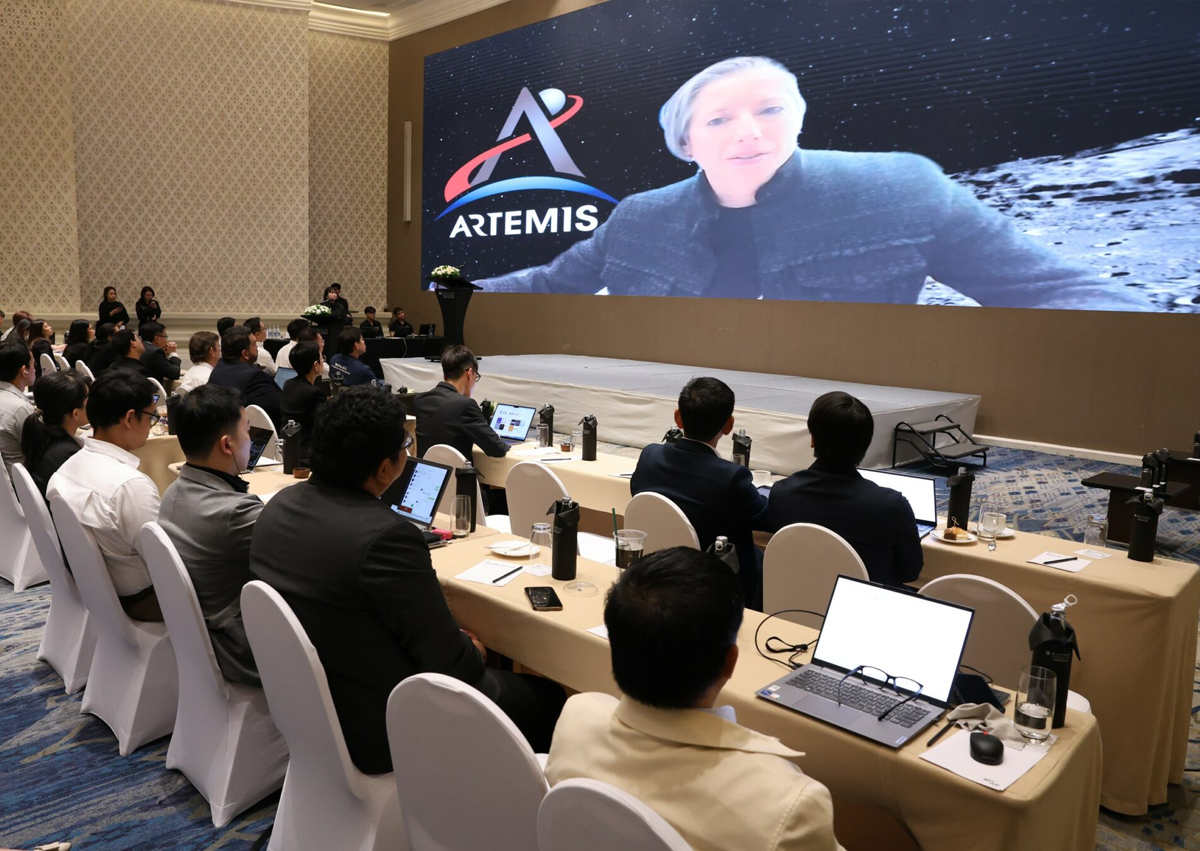
The agency, which operates under the Ministry of Higher Education, Science, Research and Innovation, hosted the “Advanced Technology Research Cooperation Network for Space Exploration (Artemis Programme)”, marking a new chapter in the country’s science and technology history.
Held at the Pullman Bangkok King Power on 23 March 2026, the event brought together senior officials, academics, private-sector representatives and international participants to help shape Thailand’s strategic direction in space cooperation.
Prof. Dr. Supachai Pathumnakul, permanent secretary of the ministry, chaired the meeting, which was also attended by Dr. Damrongrit Niammuad, GISTDA’s deputy executive director, representatives of the United States ambassador to Thailand, experts and delegates from government agencies, businesses and leading educational institutions.
Building Thailand’s Space Cooperation Network
Dr. Natthawat Hongkarnjanakul, GISTDA spokesman and director of the Space Economy Promotion Office, said the seminar marked a rare gathering of some of the country’s leading minds in science, technology and innovation.
More than 100 participants from over 40 organisations joined the discussions, which were aimed at identifying Thailand’s strengths and preparing the country for deeper cooperation with NASA.
He said the global space industry was undergoing a major transition. What was once dominated by a handful of state agencies in major powers has evolved into the “new space economy”, opening the door for private companies and developing countries to take part in rocket systems, satellite technology and new space-based business models.
A Chance to Join the New Space Economy
For GISTDA, strengthening Thailand’s space capabilities has long been a core mission. The agency sees the Artemis programme as a rare opportunity for the country to move beyond being an observer and instead contribute to one of the most ambitious international space efforts in decades.
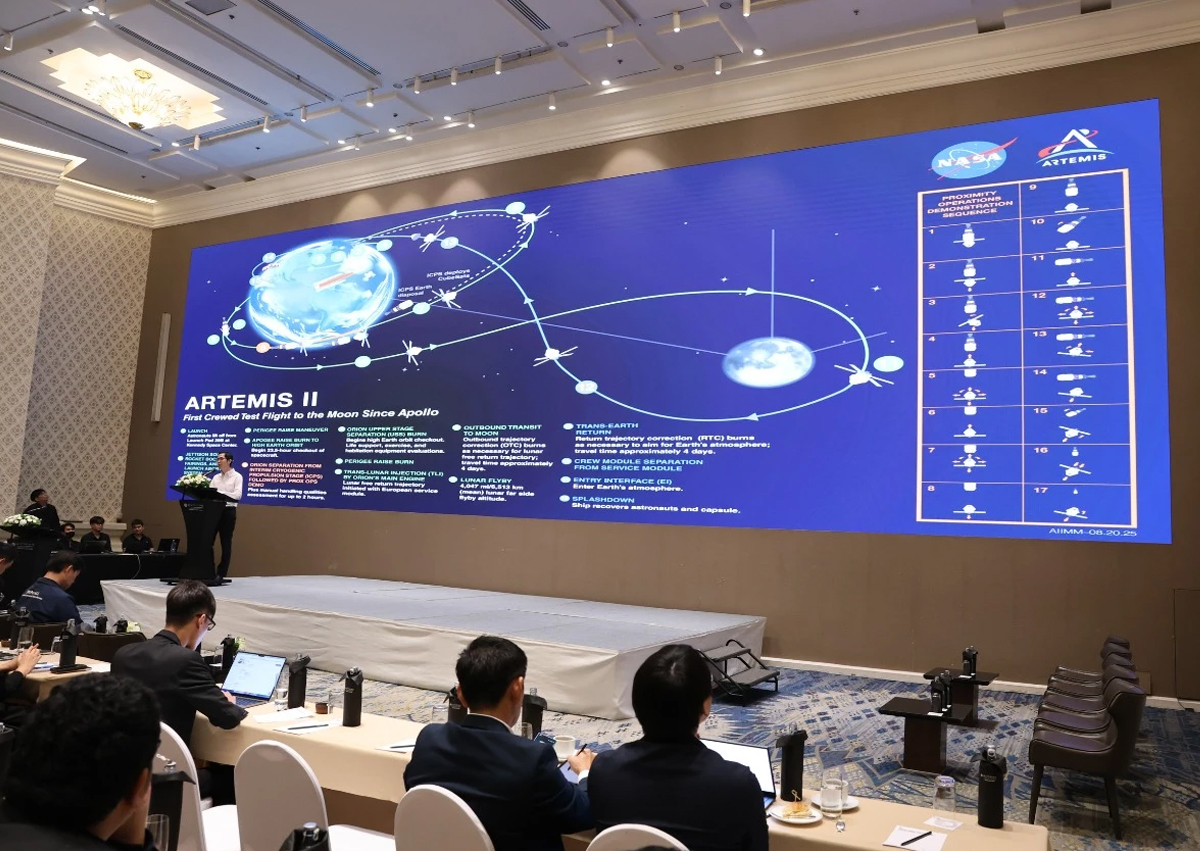
That ambition has taken on added significance after Artemis II, NASA’s first crewed lunar fly-by mission in more than 50 years, launched on 1 April 2026 and safely splashed down on 10 April 2026, marking a major step towards later Moon missions.
The Artemis programme is aimed not only at returning humans to the Moon, but also at laying the groundwork for a long-term lunar economy and future missions to Mars.
GISTDA said achieving meaningful participation in such a programme would require broad-based development across the space ecosystem, including rocket and spacecraft engineering, landing technology, life-support systems, energy, fuel, advanced communications, lunar resource utilisation, space medicine, materials science and biology.
The agency said the seminar represented an important milestone in bringing together research and technological advances from partner organisations across the country. The aim was to assess Thailand’s comparative strengths and determine where it could make practical contributions to international space exploration projects.
The technical input gathered from the meeting is expected to be developed into a white paper, or strategic policy proposal, to support concrete negotiations with US representatives, including NASA, on future cooperation under the Artemis framework.
“This is a treasure trove of knowledge and technology that could reshape the world, and it is a golden opportunity that Thailand must seize, not as a spectator, but as a co-creator of history,” Natthawat said.
From Accords to Action
Thailand signed the Artemis Accords on 16 December 2024, becoming the 51st country to join the framework for safe and responsible civil space exploration.
This effort builds on Thailand’s formal entry into the Artemis Accords, which opened the way for official discussions with the United States on lunar exploration. GISTDA has described the move as a major step in raising Thailand’s international standing in the global space sector.
The spokesman said moments such as these come only rarely in history, and not every generation has the chance to witness humanity’s return to deep-space exploration at such close range.
He said Thailand must prepare now if it wants to see its technology, expertise and national contribution reflected in future lunar missions.
GISTDA said the next step for the agency and its 40 partner organisations would be to turn today’s vision into a practical action plan that could generate economic opportunities, strengthen domestic industry, inspire a new generation of young people and demonstrate to the world that Thai potential can reach all the way to the Moon.
“I firmly believe that if all sectors begin preparing together from today, we will see Thai technology, the Thai flag and Thai participation represented in Artemis III or Artemis IV,” Natthawat added.