Smart Fertiliser Scheme Leads Effort to Cut Thai Farming Costs

Thailand has launched a tailor-made fertiliser project to help farmers cut costs, restore soil health and move towards precision agriculture.
The Ministry of Higher Education, Science, Research and Innovation (MHESI) has joined hands with the Ministry of Agriculture and Cooperatives to launch the “Tailor-made Fertiliser for Thai Farmers” project, aimed at helping farmers affected by soaring chemical fertiliser prices and soil degradation.
The launch ceremony was presided over by Prof. Dr. Yodchanan Wongsawat, Deputy Prime Minister and Minister of Higher Education, Science, Research and Innovation, at the Udon Thani Agricultural Marketing Cooperative Ltd.
The project is being positioned as a pilot model for applying appropriate science, technology and innovation to directly address farmers’ livelihood challenges.
In its first phase, fertiliser mixing units and smart platforms will be installed at 30 pilot agricultural cooperatives in Udon Thani, Chai Nat and Chiang Rai. The results will then be assessed before the project is expanded nationwide.
The initiative is expected not only to increase farmers’ net income by reducing expenses, but also to raise Thai agriculture towards environmentally friendly precision farming, while strengthening the country’s long-term food security.
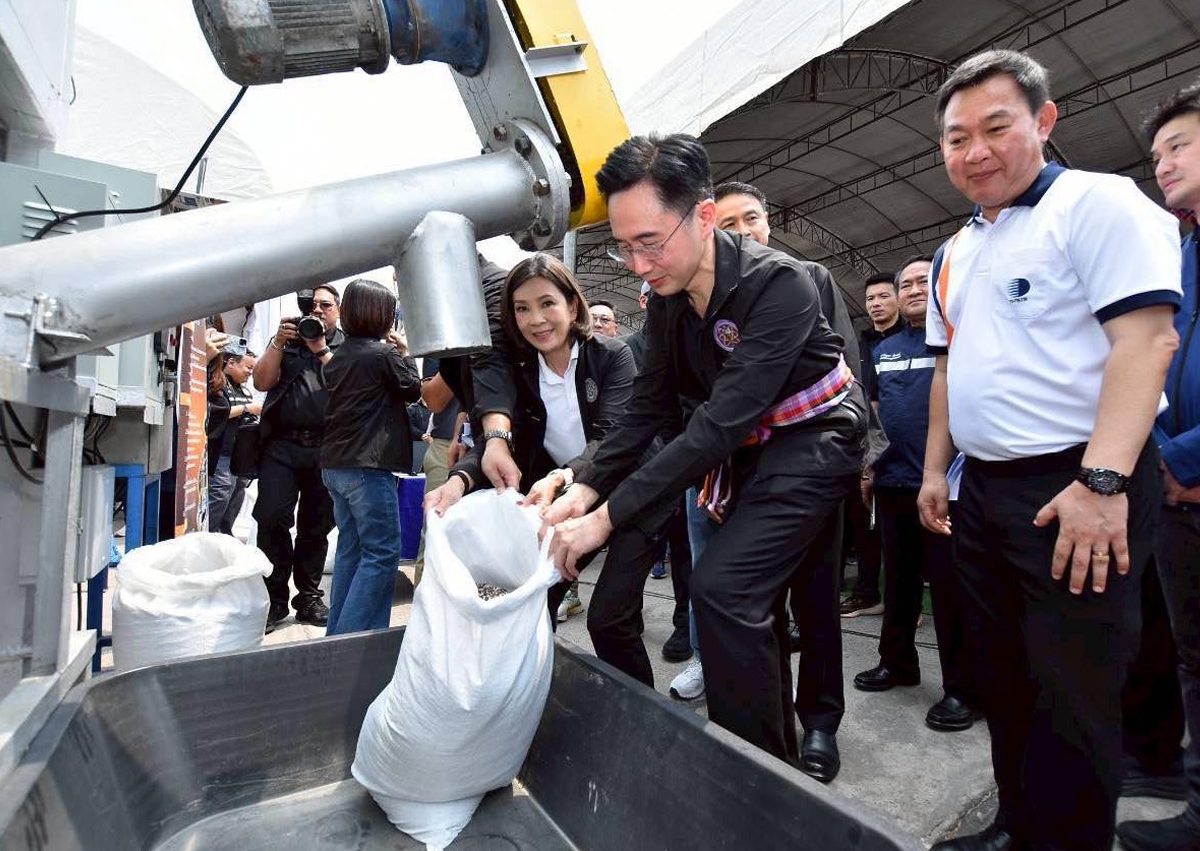
Science and Innovation to Support Farmers
Yodchanan said the government had an urgent policy to use science, technology and innovation to increase farmers’ income and reduce their burden in a practical way.
He explained that the project marks a shift from blanket fertiliser use to fertilisers designed specifically for soil conditions in each area, as well as the type of crop being grown.
Field trials found that the approach could reduce costs by 40-60% and help restore soil fertility by increasing organic matter, he said, adding that agricultural cooperatives would serve as the foundation for driving and sustainably expanding the project nationwide.
Julapun Amarnvivat, Minister of Labour, said the use of tailor-made fertiliser would help upskill agricultural workers, enabling them to mix organic-chemical fertiliser for use on their own farms and create a higher-quality workforce in the production sector.

Reducing Dependence on Chemical Fertiliser
Watcharaphon Khaokham, Deputy Minister of Agriculture and Cooperatives, said Thailand’s agricultural sector was facing a crisis caused by soaring chemical fertiliser prices linked to geopolitical problems.
Thailand imports more than 40% of its fertiliser from abroad, he said. Promoting “tailor-made organic-chemical fertiliser”, which combines organic and chemical fertilisers according to soil analysis results, is therefore an important solution to reduce reliance on chemical fertiliser alone.
He added that the approach would also help tackle soil degradation caused by the long-term continuous use of chemicals by returning at least 10% organic matter to the soil.
Rachan Soonhua, Governor of Udon Thani, said the province had strong agricultural potential, with more than 70% of its area used for farming.
He said the decision by the Thailand Institute of Scientific and Technological Research (TISTR) to pilot the tailor-made fertiliser project in the province was a timely response to the current fertiliser price crisis.
The platform is expected to become an important mechanism for strengthening agricultural cooperatives and farmers in Udon Thani, helping them become more self-reliant and improve their quality of life sustainably.
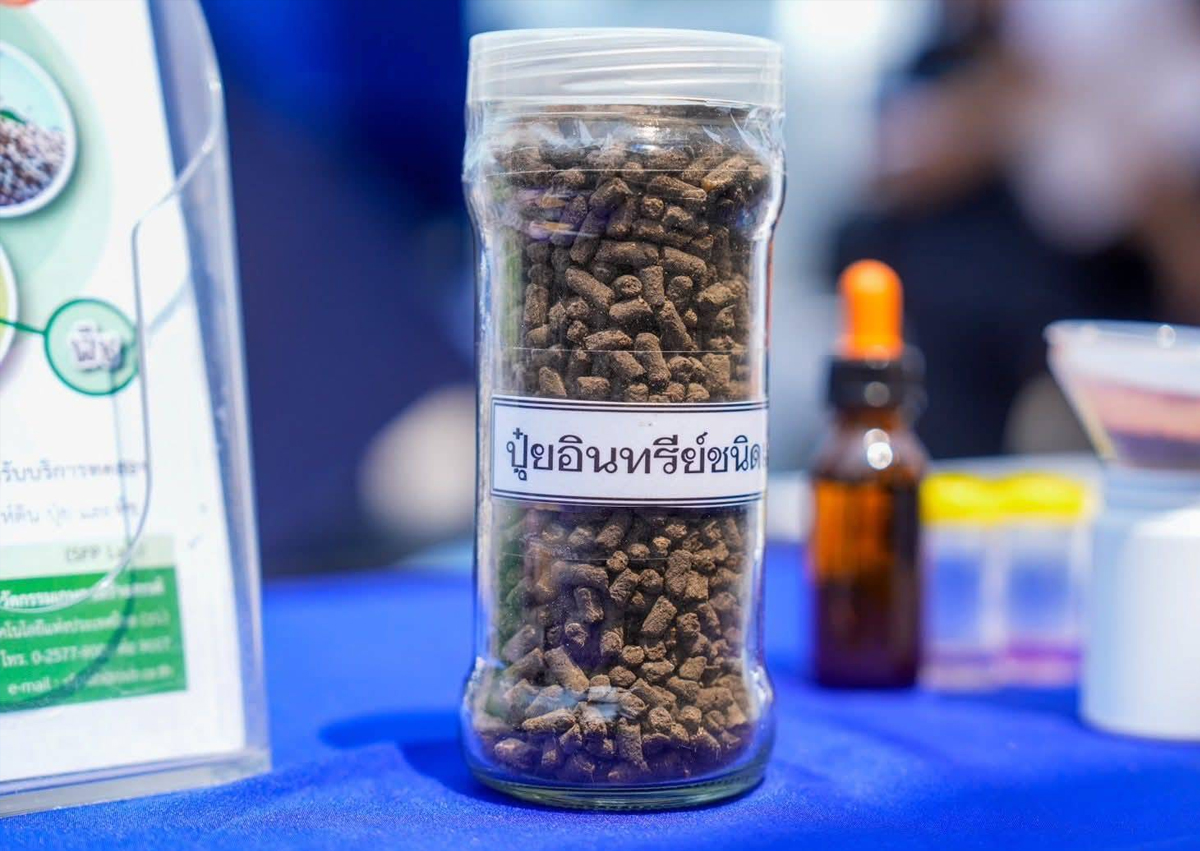
Smart Platform to Manage Fertiliser Formulas
Asst. Prof. Dr. Weerachai Arjharn, Governor of TISTR, said the project aims to install fertiliser mixing units and smart fertiliser management platforms at 30 agricultural cooperatives in the three pilot provinces of Udon Thani, Chai Nat and Chiang Rai.
The cooperatives will serve as centres for mixing tailor-made fertiliser and distributing quality fertiliser at fair prices.
TISTR will transfer knowledge on producing high-quality organic fertiliser that meets recognised standards. It will also use its “organic-chemical fertiliser formula calculation programme” to control the mixing process so that nutrients match the needs of each crop and each plot of soil.
This is expected to reduce fertiliser costs by up to 60% compared with the use of standard chemical fertiliser formulas.