Turning Creativity into Currency: Thailand's Drive to Build a Soft Power Economy on Intellectual Property

From royal textile designs to a national IP reform agenda, Thailand is making the case that cultural heritage — rigorously protected and commercially deployed — is one of its most powerful economic assets.
Thailand has long been admired for the richness of its culture. Now it is working, with increasing urgency and ambition, to turn that admiration into economic value — and intellectual property is the mechanism through which it intends to do so.
The government's push to build a fully functioning creative economy is backed by a concrete national framework. In August 2025, the National Intellectual Property Policy Committee approved the Intellectual Property Development Plan 2026–2027, integrating proactive measures in legal development, IP infringement prevention, government service delivery and public engagement — the most comprehensive overhaul of Thailand's IP architecture in recent years.
The Ministry of Commerce reaffirmed its commitment to establishing an IP-friendly ecosystem spanning all stages from creation to commercialisation.
The strategy directs the Department of Intellectual Property to improve Thailand's performance in the Global Innovation Index through six key pillars, establishing short-, medium- and long-term policy directions for the nation.
Those pillars encompass legal reform, stronger enforcement, improved public services, awareness-building, SME empowerment and international alignment — a package designed to signal to creators, investors and trading partners alike that Thailand takes intellectual property seriously as an instrument of national development.
Thailand is also set to adopt a new data model developed by the World Intellectual Property Organisation (WIPO) to evaluate and enhance its creative economy, aiming to promote its soft power globally — making it one of the first countries in the world to implement WIPO's Creative Economy Data Model. The pilot is a joint effort involving WIPO, the Department of Intellectual Property and the Creative Economy Agency (CEA).
The Creative Economy Agency's goals for 2026 are to produce more than 300,000 creative entrepreneurs and professionals, drive the creation of more than 350 new commercial intellectual property works, and help raise the Gross Value Added of Thailand's creative industries by 5 per cent.
The agency plans to host Thailand's first dedicated international marketplace for content and IP trading, underscoring the government's intent to position the country not merely as a producer of creative work but as a hub for its commercial exchange.
A Royal Blueprint for the Creative Economy
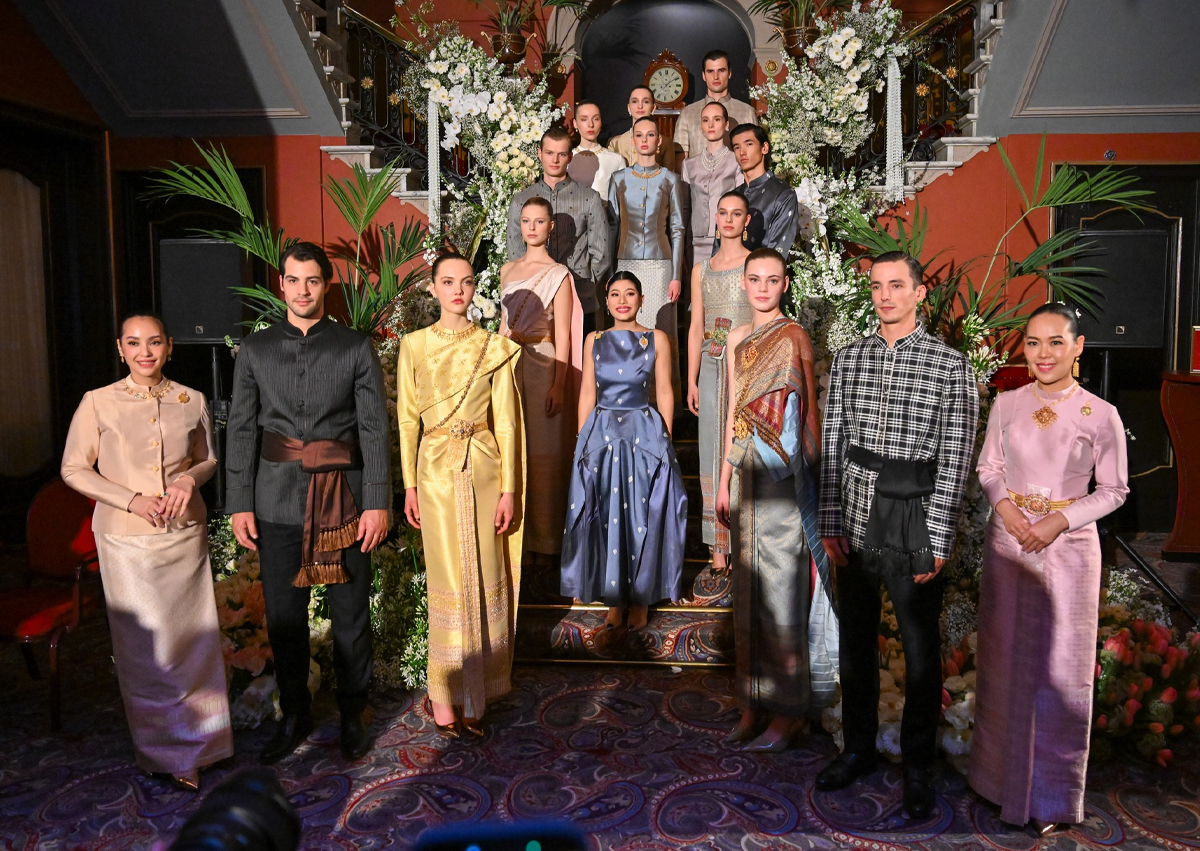
Amid this national effort, one figure has emerged as its most compelling embodiment — and its most instructive example of what rigorous IP stewardship can achieve. HRH Princess Sirivannavari Nariratana Rajakanya has built an intellectual property portfolio that, in both its scale and its social impact, stands as a working model for Thailand's creative economy ambitions.
The Princess's work spans fashion, textile design, fine art and classical music composition — a breadth of creative output that might seem unlikely to yield a coherent IP strategy, yet does so with remarkable precision. To date, she has registered 541 intellectual property items: 256 design patents, 227 copyrights and 58 trademarks, including the "Sirivannavari" name and the distinctive Peacock logo, secured both domestically and in international markets.
That portfolio is not merely a catalogue of creative works. It is a commercial architecture. The trademark registrations protect the authenticity of her creative output and prevent brand dilution in overseas markets where Thai textiles command growing interest.
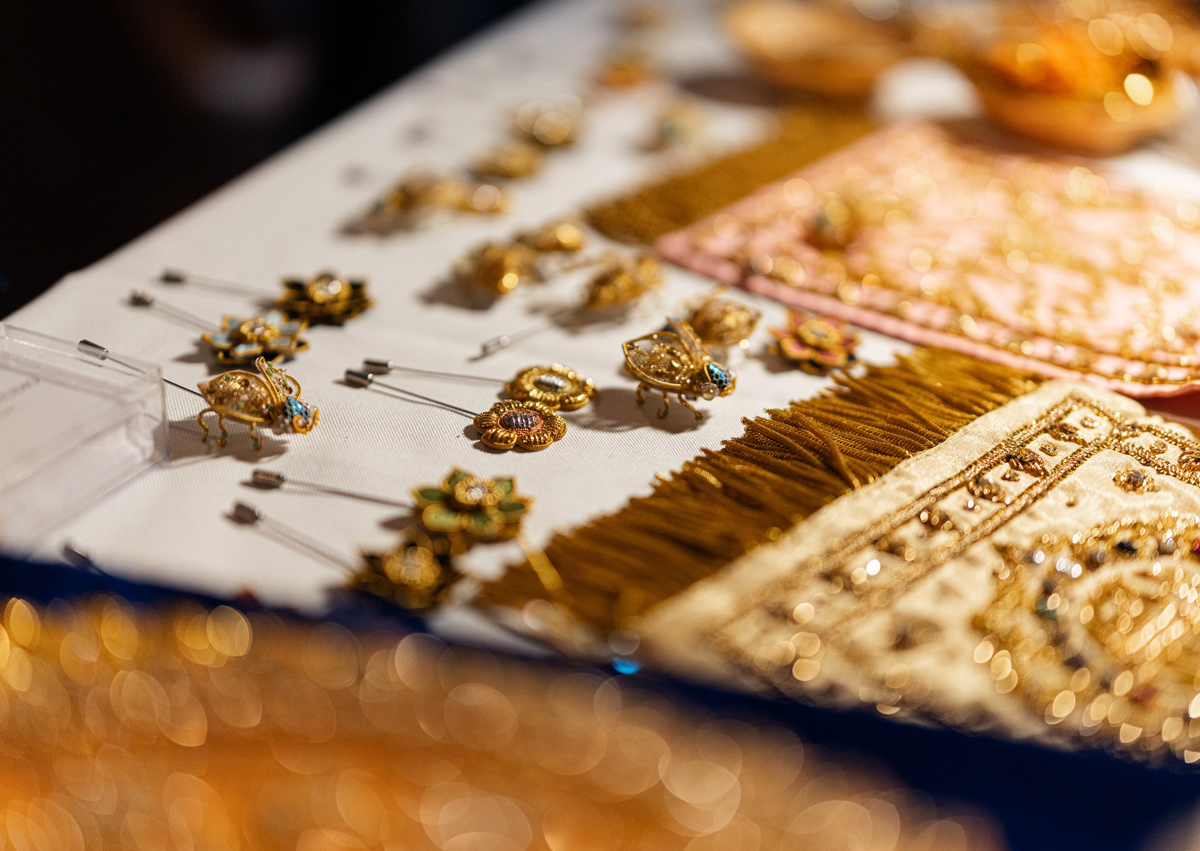
The design patents secure the distinctive textile motifs — among them the intricate Dok Rak Ratchakanya and Siri Wachira Phak patterns — against unauthorised reproduction. Together, they demonstrate precisely the model that the Department of Intellectual Property is seeking to replicate across the wider creative sector.
Auramon Supthaweethum, Director-General of the Department of Intellectual Property, described the Princess's portfolio as a benchmark for the industry.
"Her achievements serve as a model for the new generation of Thai creators to elevate their work to international standards," she said. "This will help generate income, enhance competitiveness, and drive sustainable economic growth rooted in local wisdom and cultural heritage."
Silk, Community and 200 Billion Baht
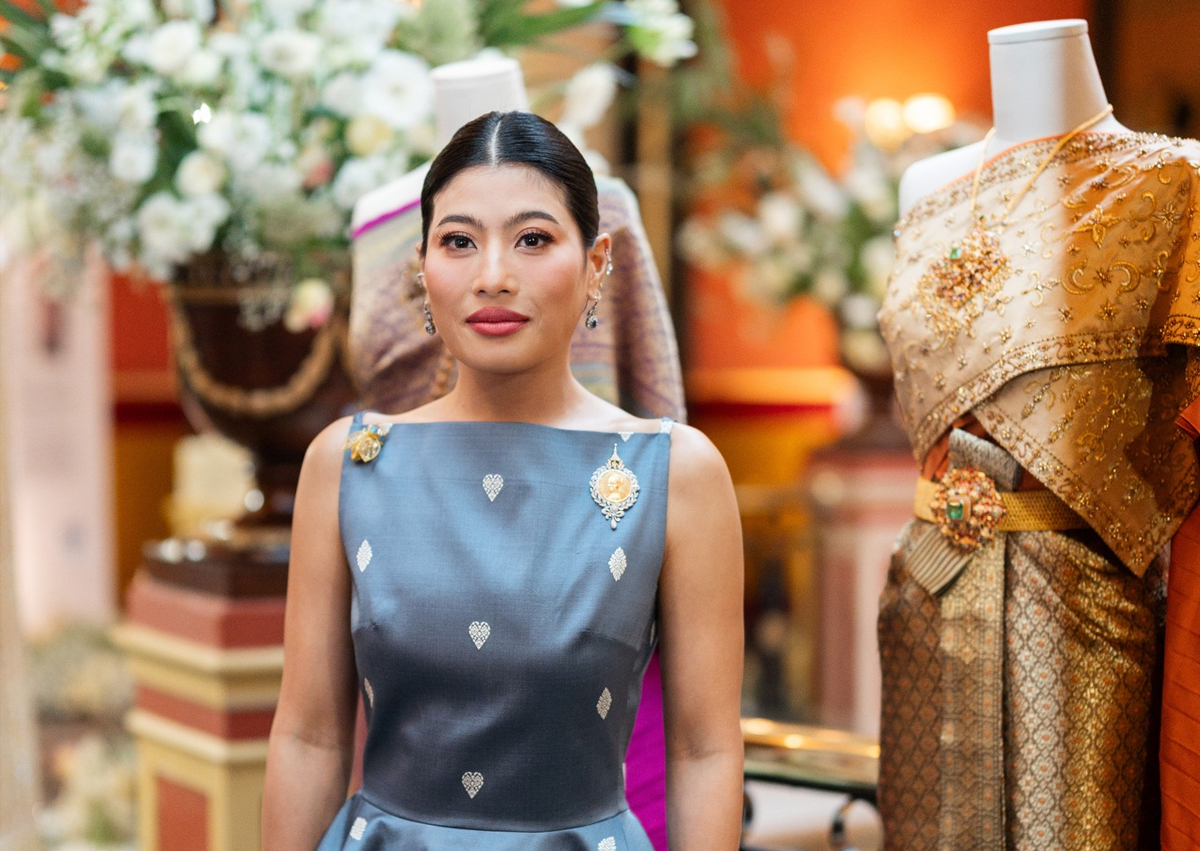
The Princess's IP strategy is inseparable from a wider social mission. Through collaboration with the Department of Community Development and her Pha Thai Sai Sanook ("Thai Cloth is Fun") concept, she has encouraged weavers across the country to adopt more complex, IP-protected designs — directly benefiting an estimated 800,000 households and generating more than 200 billion baht in grassroots economic value.
Deputy Prime Minister and Minister of Commerce Suphajee Suthumpun, who presided over a recent exhibition of the Princess's work at Siam Paragon, placed the achievement in its royal context, noting that the Princess continues the legacy established by Her Majesty the Queen Mother in elevating Thai textiles to national and international prominence.
That legacy has been updated for the present moment: traditional weavers have been encouraged to embrace new colour palettes and contemporary design influences without sacrificing the integrity of their craft.
Dr Anucha Thirakanont of the Sustainable Arts and Crafts Institute of Thailand credited this forward-looking philosophy as the source of its success.
"Time changes, people change. To do the same as what was done before would not work for the present," he said — a statement that captures the essential tension at the heart of Thailand's creative economy strategy: how to honour tradition whilst making it commercially viable in a competitive global market.

Global Recognition at the Highest Level
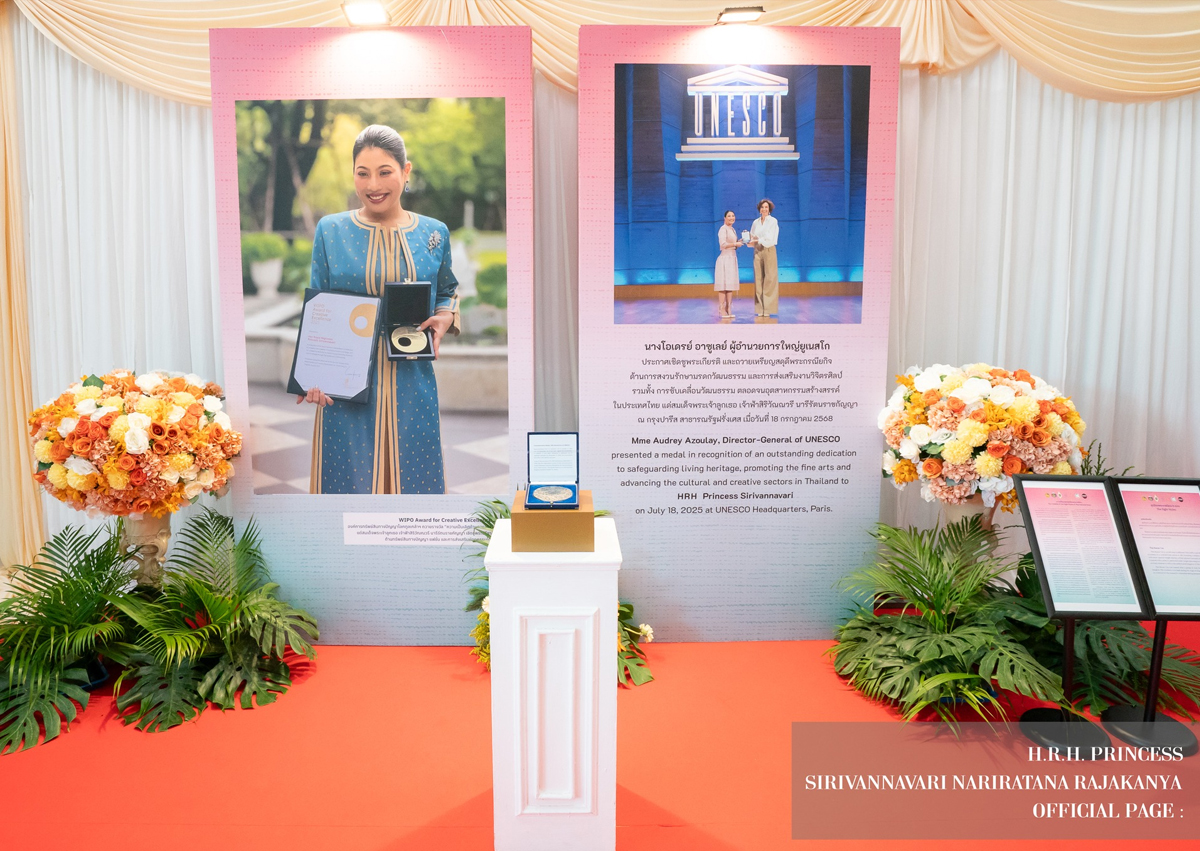
In August 2025, the World Intellectual Property Organization presented the Princess with its WIPO Award for Creative Excellence 2025 — one of the most prestigious international honours in the field of intellectual property and creativity. The award recognises not only artistic talent but the tangible socio-economic benefits that the Princess's work has delivered to Thai artisans and communities.
For Thailand's government, the recognition carries a significance that extends beyond the personal. It is international validation that the country's approach to marrying cultural heritage with rigorous IP protection can produce outcomes that the world's leading IP institution regards as exemplary — precisely the signal that the Department of Intellectual Property's reform agenda is designed to amplify.
Creativity Without Borders
The Princess's creative ambitions extend well beyond textiles. As Chair of the Artistic Committee of the Royal Bangkok Symphony Orchestra (RBSO), she has overseen a comprehensive transformation of the ensemble, mandating a full re-auditioning of the entire orchestra, introducing the practice of setting seasonal programmes a year in advance and composing eight major works of her own — including violin and piano concertos developed through international collaboration with musicians from Greece, Germany and France.
The results have been felt on the world's most demanding stages. A 2023 European Tour taking in Vienna, Munich and Paris culminated in a ten-minute standing ovation at Vienna's Golden Hall — a venue that represents the highest standard of classical music performance anywhere in the world. The moment was not merely a cultural triumph. It was a demonstration, consistent with the government's wider soft power strategy, that Thai creativity — when nurtured, structured and presented with rigour — can command the attention and respect of global audiences.
Protecting the Legacy
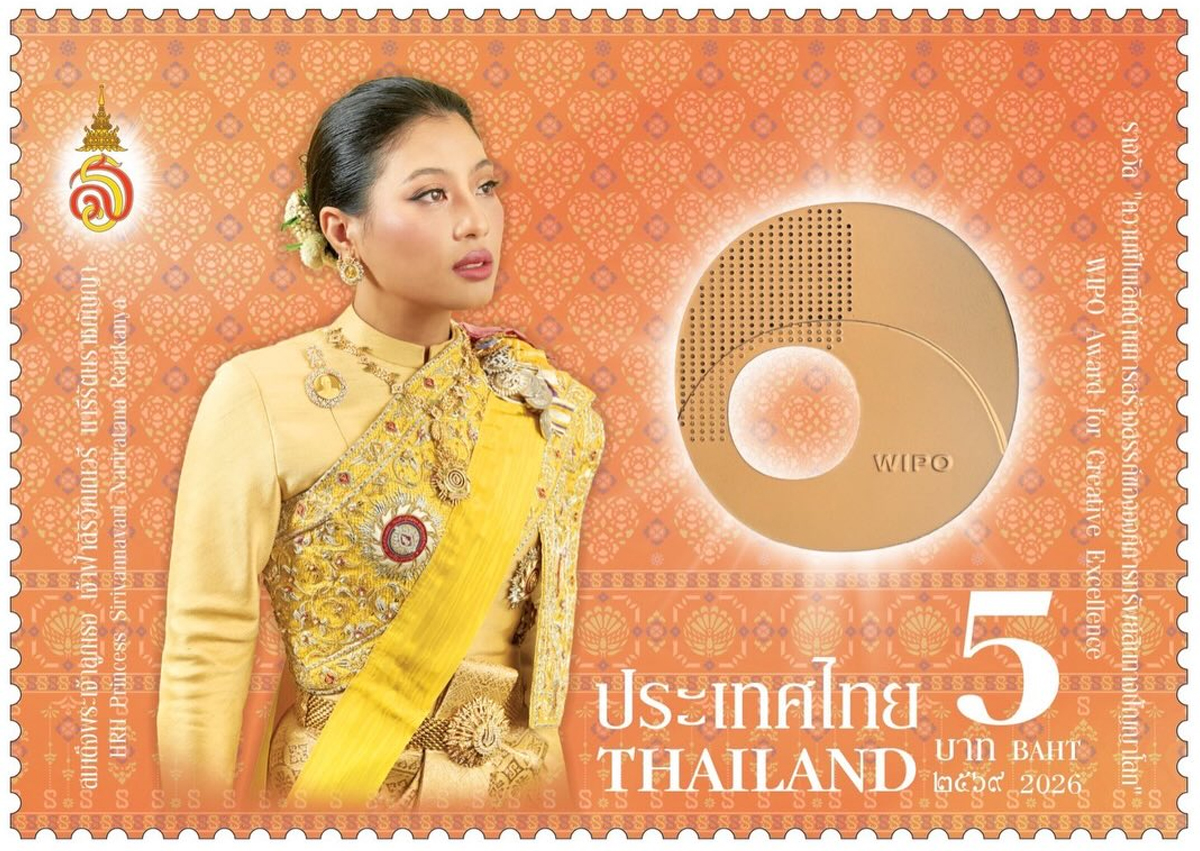
To mark the WIPO award and the ongoing exhibition of the Princess's work, Thailand Post, in collaboration with the Department of Intellectual Property, has released a commemorative stamp set featuring her portrait in traditional Thai attire, alongside imagery of the WIPO award and the royal monogram "SR", set against her own Sirirajchapatraporn textile pattern in orange tones.
Thailand Post Chief Executive Dr Dhanant Subhadrabandhu described the series as intended "to inspire further creative development and raise awareness of the value of intellectual property among the public." Available through the ThailandPostMart digital application, the stamps are designed to bring the milestone to a new generation of Thais — a small but deliberate act of cultural transmission in a country that is working hard to ensure its creative heritage has a future as well as a past.
A Strategy, Not Just a Story
Taken together, the national IP reform agenda, the WIPO partnership, the CEA's commercial targets and the Princess's own creative legacy constitute something more than a collection of individual initiatives. They represent a coherent, government-backed effort to reposition Thailand in the global economy — as a country whose competitive advantage lies not only in manufacturing or tourism, but in the ideas, designs, stories and cultural expressions that it can create, protect and sell to the world.
As Thailand's creative economy leaders have put it, the creative economy benefits smaller players by enabling the distribution of wealth into local communities and secondary cities — allowing local creators to access international markets without the need for massive investment in infrastructure, transitioning communities from selling traditional raw materials to offering unique brand experiences rooted in local identity.
Together, these developments reflect Thailand’s broader effort to position creativity, cultural heritage and intellectual property as long-term drivers of economic growth and international influence.


