The Dawn of Smart Healthcare: How Thailand is Deploying AI and Robotics to Bridge Regional Healthcare Gaps

The Ministry of Public Health pioneers cutting-edge AI, autonomous medical robots, and seamless digital systems to ensure world-class care for all.
For decades, the standard of healthcare a person received was often dictated by their postcode. Rural provinces worldwide routinely lag behind major cosmopolitan centres in accessing specialist doctors and advanced medical technologies. However, Thailand is systematically rewriting this script. Through a visionary policy shift orchestrated by the Ministry of Public Health (MOPH), the Southeast Asian kingdom is deploying an ecosystem of Artificial Intelligence (AI), medical robotics, and nationwide big data networks to build a fairer, healthier society.
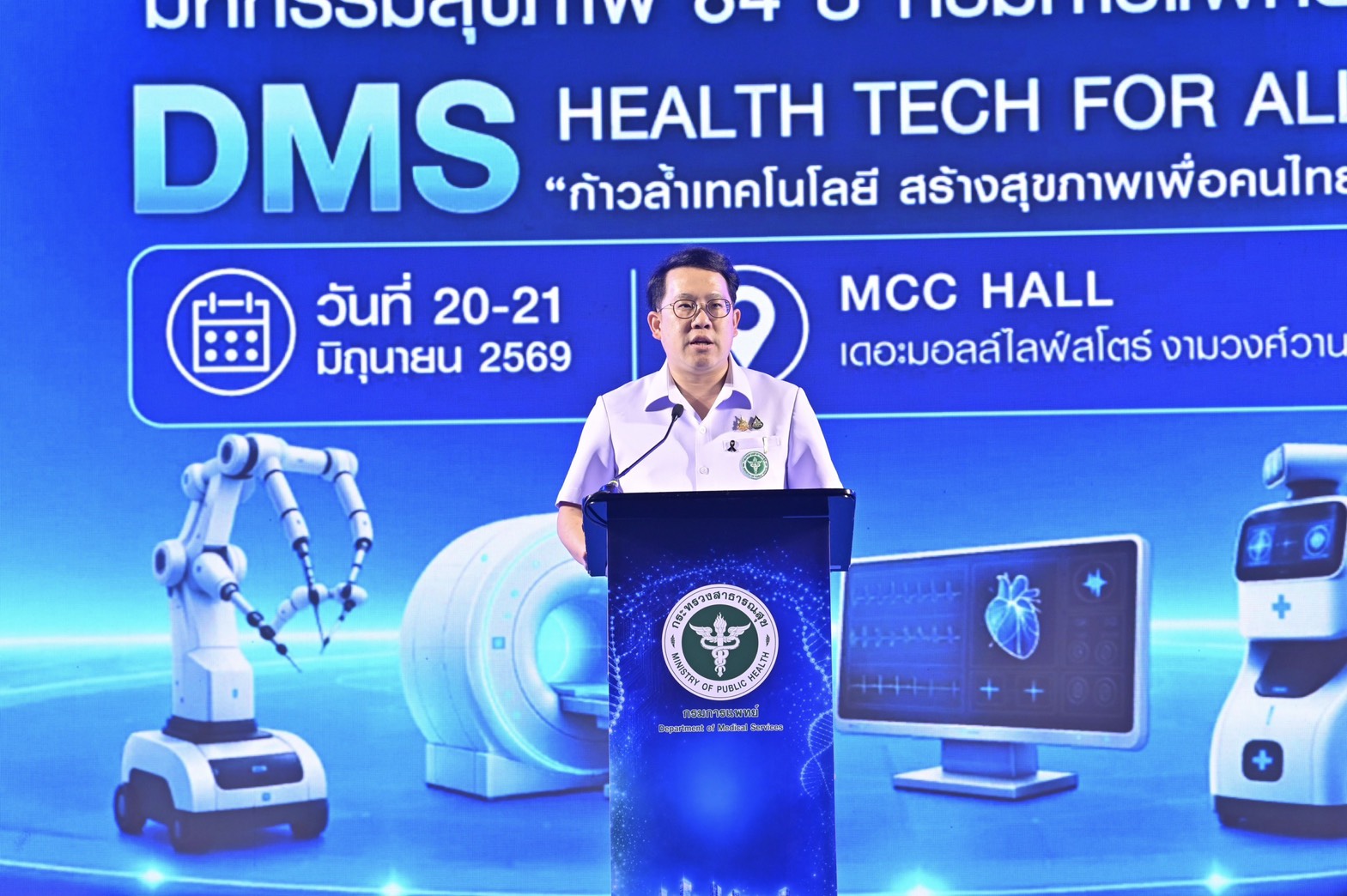
This bold strategic leap into the future took centre stage at the recent 84th Anniversary Health Fair of the Department of Medical Services (DMS). Held under the theme “DMS Health Tech for All: Advanced Technology Creating Good Health for Thai People,” the exhibition served as a concrete blueprint for the country's transformed public sector—one that balances technological ambition with social equity.
Driving the 'New S-Curve' in Public Health
Opening the summit, Public Health Minister Pattana Promphat declared that Thailand’s public health network has entered a full-scale transition into an era of advanced medicine. For the MOPH, integrating high-tech tools is not merely a bid for institutional modernization; it is the ultimate vehicle for closing regional health gaps.
"Advanced medical technology and innovation are no longer distant concepts," Minister Pattana noted. "They are the essential mechanisms driving equal access to advanced care for every Thai citizen—honouring our vision of providing 'The Best for the Most'."
To realise this vision sustainably, the DMS has anchored its future growth on a distinct "I+DMS" organisational philosophy:
- Integrity: Driving moral and transparent public service delivery.
- Digital: Integrating data systems seamlessly so that physical location ceases to be a barrier to clinical excellence.
- Mindset: Cultivating a highly adaptive public workforce capable of embracing rapid global shifts.
- Social Impact: Ensuring every technological investment directly elevates the community's quality of life.
The Triad of Digital Healthcare
Under the guidance of MOPH policies, the modern framework of Thai public healthcare rests upon three distinct strategic pillars: Robotics and Medical AI, Domestic Medical Industry Support, and Genomic and Precision Care. Together, these pillars translate directly into everyday life-saving actions across the nation’s 22 Medical Centers of Excellence.
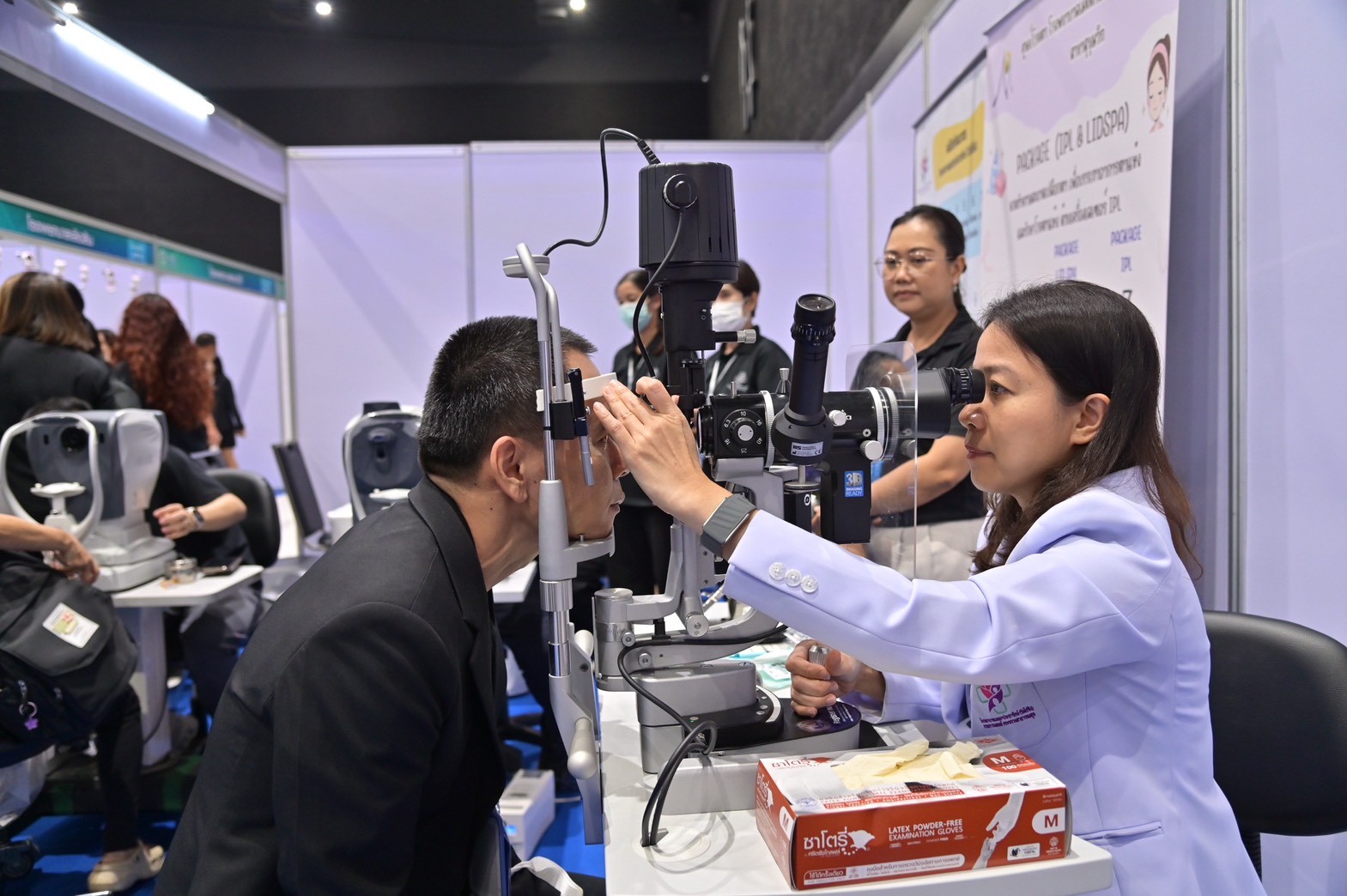
In practice, this transformation is already reshaping healthcare delivery across the country. Local clinics are increasingly using AI-assisted software to support earlier diagnosis and help provincial patients access specialist care more quickly. For instance, advanced AI systems can now screen for diabetic retinopathy in minutes, identifying at-risk patients with pinpoint accuracy.
Simultaneously, the introduction of Robotic Surgery, advanced 3D medical printing, and automated rehabilitation robots are reducing both the physical workloads of dedicated frontline medical staff and the recovery times of patients. For rural areas struck by natural disasters, the MOPH has pioneered mobile emergency room (ER) tents and autonomous delivery drones capable of carrying vital pharmaceuticals across rugged, otherwise impassable terrains.

'MorPhrom' and the Borderless Hospital
Perhaps the most universally felt upgrade to the public healthcare infrastructure is the expansion of the "MorPhrom" digital platform. Originally launched to manage national vaccination rollouts, the platform has evolved into the central backbone of Thailand's Digital Health network.
By securely interconnecting electronic health records across a vast web of community, general, and specialized hospitals, "MorPhrom" effectively eliminates the historic issue of fragmented medical data. Patients can now relocate or seek emergency care anywhere within the kingdom without the administrative burden of manually transferring physical charts. This continuous flow of information empowers clinicians to plan accurate treatments instantly, dramatically enhancing patient safety.
This seamless connectivity is already proving revolutionary at the regional level. In Health Region 4—spanning provinces such as Ayutthaya, Nonthaburi, and Pathum Thani—the MOPH recently established partnerships with Thammasat University Hospital and the Prasat Neurological Institute. Under this arrangement, stroke patients can be referred swiftly to these specialized hubs for urgent, life-saving Mechanical Thrombectomy (catheter-based blood clot removal in the brain) with zero out-of-pocket costs to the patient.

A Global Medical Hub
Beyond the clear domestic achievements, the Ministry of Public Health’s strategic modernization doubles as a powerful economic catalyst. By proving that its public infrastructure can safely regulate and scale complex treatments—such as Hyperthermic Intraperitoneal Chemotherapy (HIPEC) for advanced cancers and genomic-targeted therapies—Thailand is solidifying its international reputation.
The national health strategy for 2026 aligns perfectly with the broader government push to build a high-value, tech-driven economy. By showcasing a public sector that actively collaborates with domestic creators, academic institutions, and international tech providers, Thailand is positioned as an attractive global destination for healthcare investment and medical tourism.
Ultimately, the 84-year journey of the Department of Medical Services serves as a striking testament to how public service can evolve. By turning advanced laboratories into real-world lifelines, the Ministry of Public Health is creating an inclusive, resilient future where advanced healthcare becomes more accessible to people across the country.


