Thailand’s Metrology Drive Strengthens Future Industrial Edge

Thailand’s NIMT showcases how precision measurement strengthens national quality infrastructure, future industries and daily life.
Precision may be invisible to most people, but it is one of the quiet systems that allows a modern economy to function. For Thailand, metrology is not only a scientific discipline. It is a strategic foundation for industrial competitiveness, consumer protection and sustainable national development.
National quality infrastructure is essential to strengthening the country’s manufacturing and service sectors, particularly in developing goods and services that are safe, reliable and able to meet recognised standards.
To achieve that goal, Thailand’s quality infrastructure must operate as an integrated system, with each part supporting the others efficiently. A strong system enables Thai products and services to compete more sustainably on the global stage, while also protecting domestic consumers and improving income opportunities and quality of life.
At the centre of this system is the National Institute of Metrology (Thailand), or NIMT, which is responsible for establishing, maintaining and developing the country’s national measurement standards, reference materials and other measurement benchmarks.
Precision behind Thailand’s future economy
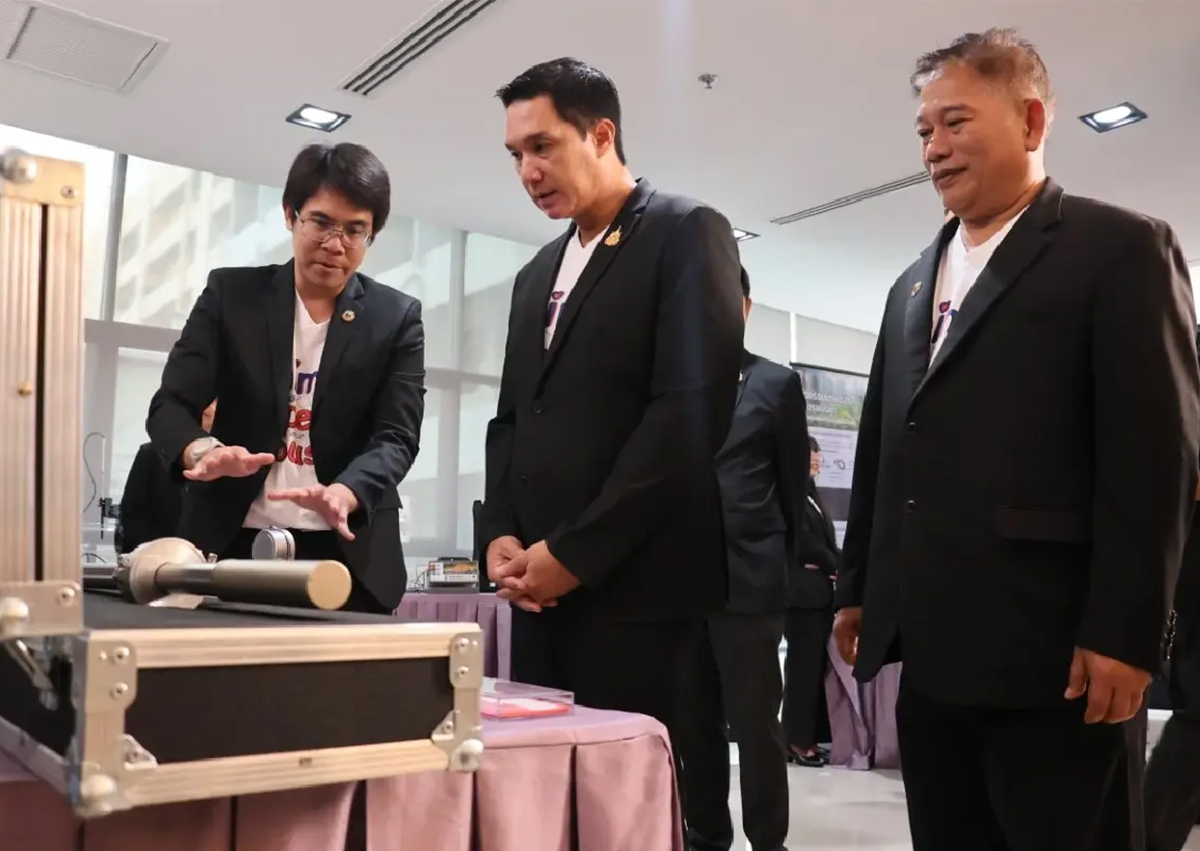
Danuphorn Punnakanta, Vice Minister for Higher Education, Science, Research and Innovation, described metrology as part of the hidden world of national precision, a world many people may never see but whose results they experience every day.
He described NIMT as the “backbone” of Thai science, technology and innovation over the past 28 years.
Behind the scenes, he noted, the institute has helped make electric rail systems safer, supported more accurate medical diagnosis, enabled Thai products to compete in global markets and strengthened confidence in emerging sectors ranging from electric vehicles to semiconductors.
“The government and MHESI have always believed that credibility in science and measurement standards creates enormous value, like business credit that can be converted into significant economic value,” he remarked.
He also emphasised that if Thailand neglects credibility at regional and global levels, the country will struggle to achieve its economic growth targets.

Four themes of metrology in daily life
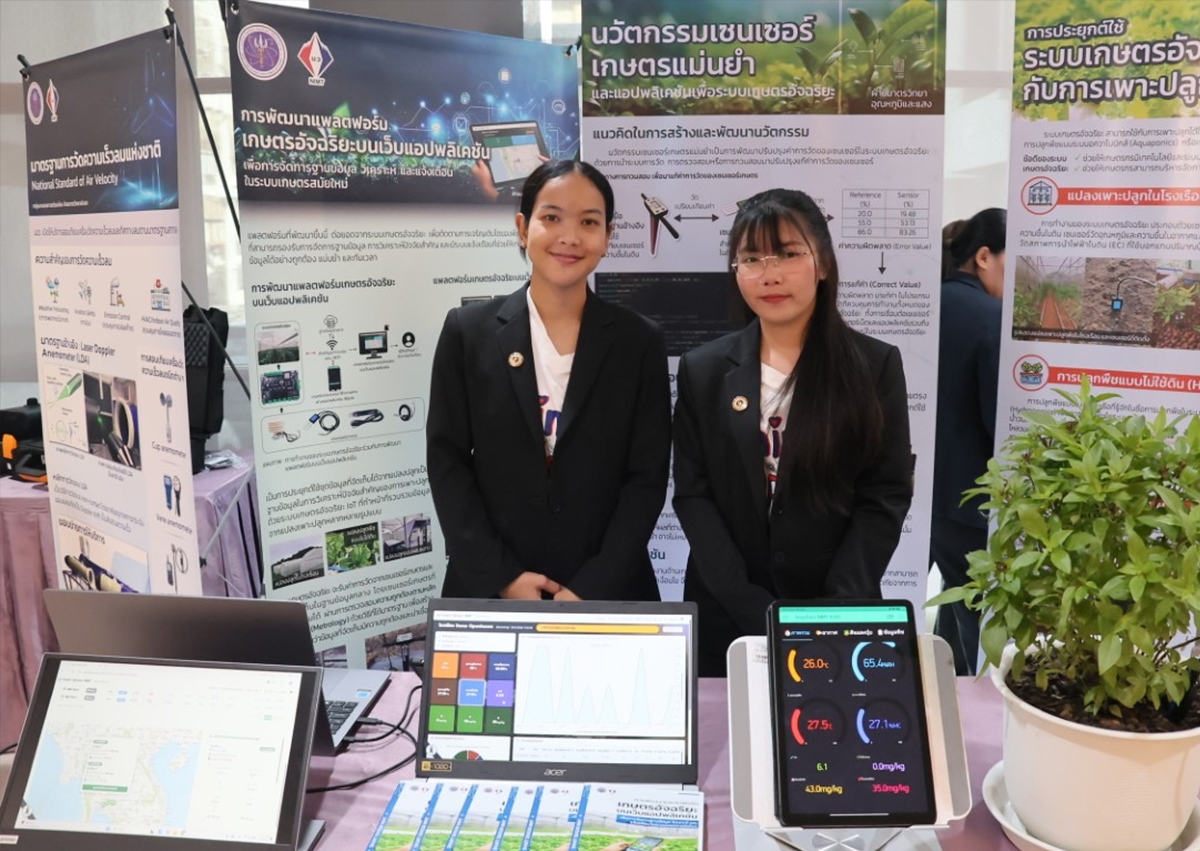
NIMT Open House 2026, held on 29–30 June, presented the role of metrology through four themes covering standards, infrastructure, safety, and daily life.
- Absolute Precision showcased advanced measurement standards and quantum technologies, including optical atomic clocks, quantum-based voltage and resistance standards, and photon-level measurements used in medical equipment, with links to the semiconductor and electronics industries.
- Perfect Balance focused on ensuring accuracy and fairness, covering the verification of EV chargers, high-voltage systems for smart grids, and the calibration of vehicle speed-measurement devices.
- Future Force examined applications in food safety, energy security, and rail systems, along with earthquake-measurement systems supporting public warning mechanisms aligned with international standards.
- Vital Pulse highlighted everyday applications, including DNA testing in halal food, quality testing for herbs and cosmetics, medical instrument accuracy, vaccine transport, and pollution monitoring.
From national time to semiconductors
One example of NIMT’s importance is its work on time, a fundamental physical reference used in modern calculation, synchronisation and technology. Thailand can now develop its own time standard and compare it with international references.
The institute is also developing quantum capabilities so that Thailand is better prepared for advanced technology, rather than falling behind other countries.
In the semiconductor industry, where demand has reached the two-nanometre level, NIMT maintains that Thailand has the capability to measure at that level in line with international standards. The institute is ready to support the sector if semiconductor manufacturers require its services.
In standards certification, NIMT serves as Thailand’s primary standards body. It regularly sends standards for comparison with the International Bureau of Weights and Measures, or BIPM, in France.
Thailand also provides training and transfers standards to countries in the region, including Kazakhstan, Nepal and India, through institutional cooperation. At home, NIMT transfers secondary standards to the private sector so companies can serve industrial needs more fully.
The institute focuses on areas where private operators are not able to invest, while transferring work that the private sector can handle. This approach allows national resources to be used more efficiently and helps expand Thailand’s measurement ecosystem.
In this sense, metrology is far from a distant technical issue. It is a force that helps drive Thailand’s future. For industry, it provides confidence. For consumers, it protects fairness and safety. For the country, it is strategic infrastructure that supports competitiveness, innovation and sustainable growth.