Thailand Targets China’s Premium Market with GI Export Drive

Thailand is expanding GI exports to China’s premium market after a 500-tonne Sisaket volcanic durian deal, while Tabtim Siam pomelo attracts new buyers.
Thailand is positioning geographical indication products as a new export strategy, with the Ministry of Commerce targeting premium consumers in China and seeking to turn the distinctive origins of Thai agricultural and community products into greater commercial value.
A geographical indication, or GI, identifies products whose distinctive qualities, reputation or characteristics are linked to a particular place. Their identity may derive from local raw materials and traditional knowledge, as well as geographical factors such as soil, water and climate.
Registration by the Department of Intellectual Property (DIP) effectively gives these products a recognised local identity while providing assurance of their origin and distinctive characteristics.
For producers, GI certification can differentiate their goods from conventional products, increase their value and strengthen consumer confidence. The government also sees the system as a way to move agricultural and community products into premium markets at home and overseas.
The strategy comes as consumers increasingly pay attention to provenance, product stories and local identity. Products with clearly defined origins can command higher prices, providing an opportunity to generate more sustainable income for farmers and local communities.
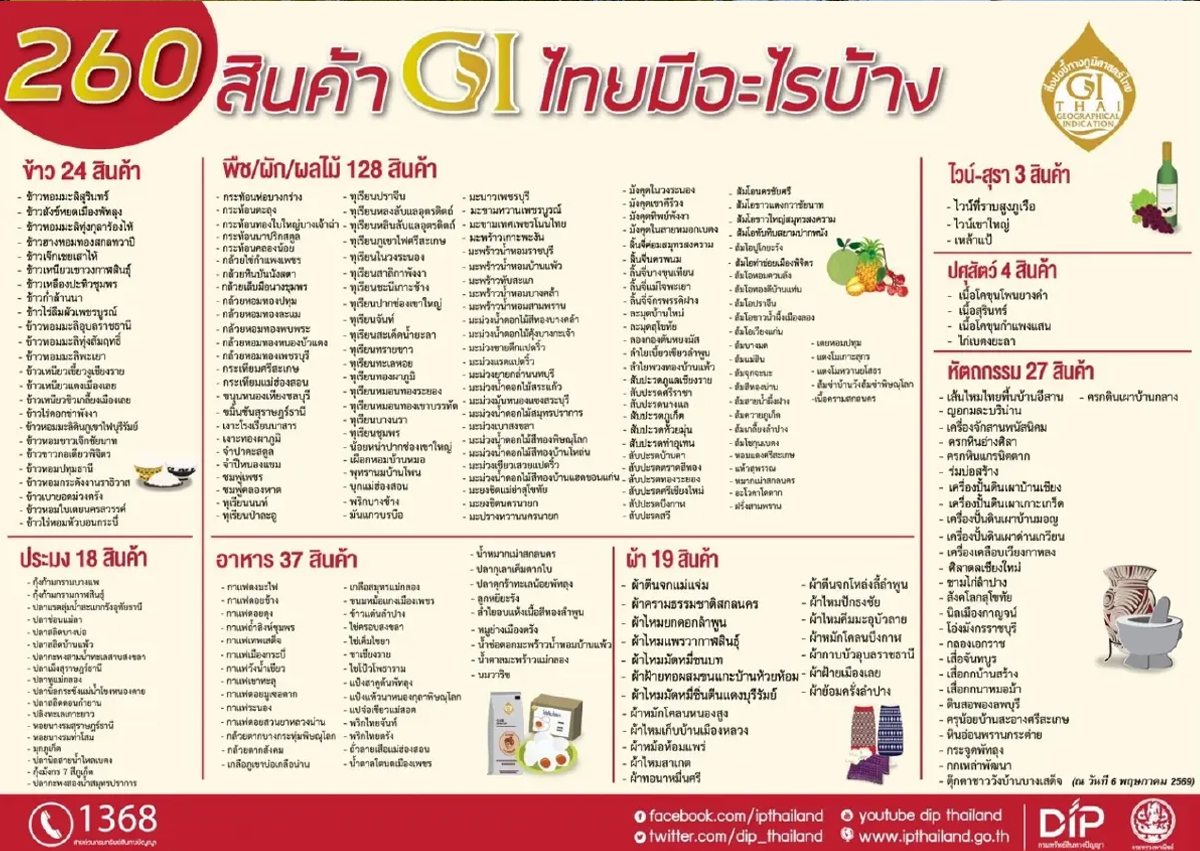
Thailand’s GI portfolio includes 260 listed products. These comprise 128 plant, vegetable and fruit products, 37 food products, 27 handicrafts, 24 rice products, 19 textiles, 18 fisheries products, four livestock products and three wine and spirits products.
Thai GI products generate more than 116 billion baht in economic value, with fruit accounting for almost half of the total portfolio, underlining the potential for Thai agriculture to move further into international premium markets.
Promoting GI products is also part of the Commerce Ministry’s policy agenda under Deputy Prime Minister and Commerce Minister Suphajee Suthumpun, with an emphasis on adding value and strengthening the identity of local products.
Shanghai Opens Door To Premium Fruit Exports
China has emerged as a major target for the strategy.
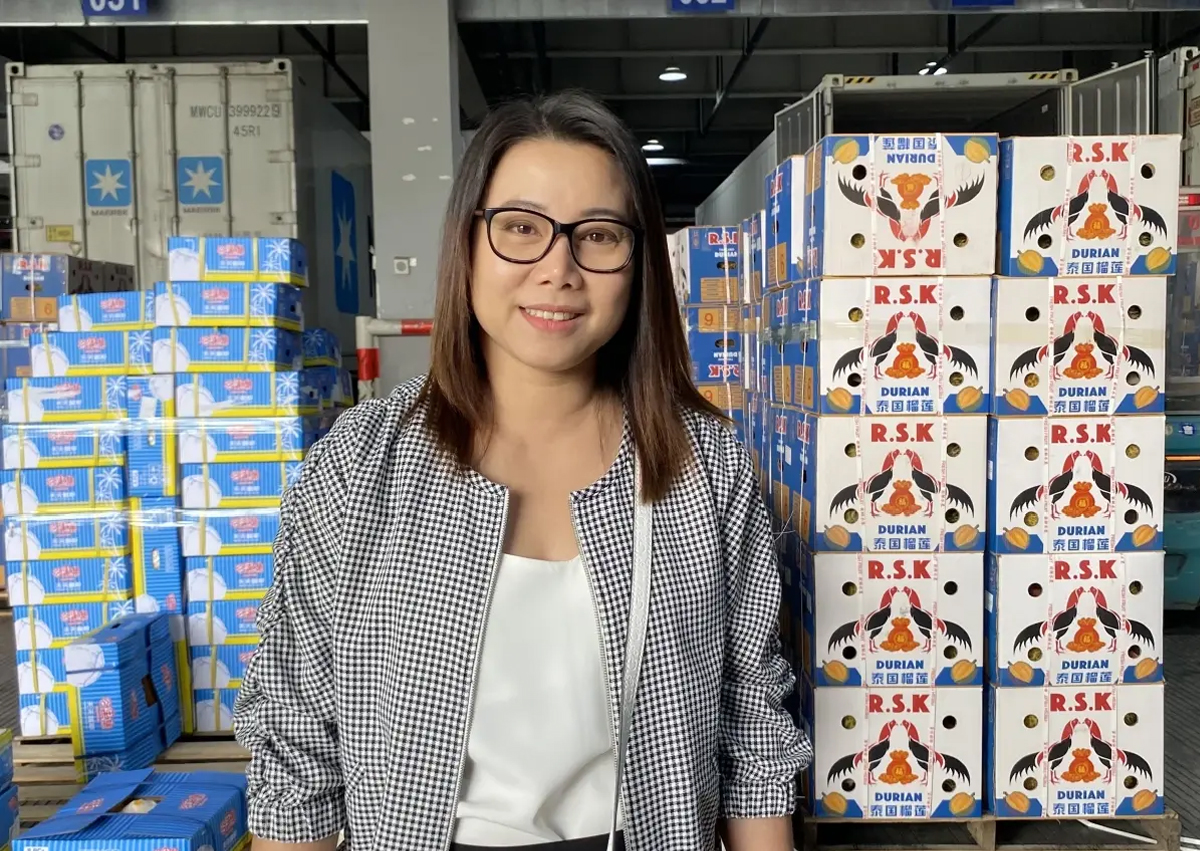
The DIP has taken Thai GI businesses to Shanghai for business-matching sessions with major Chinese fruit importers at Huizhan Fruit Wholesale Market, a major distribution centre serving eastern China and a gateway to a large consumer market.
The trip produced an immediate commercial result when an exporter of Sisaket volcanic durian secured a forward purchase agreement for 500 tonnes.
The deal demonstrated how GI certification can be developed beyond intellectual property protection into a tool for generating trade opportunities.
For Sisaket volcanic durian, its commercial appeal is not based solely on the fruit itself. Its GI identity connects the product directly with Sisaket and the province’s volcanic soil, distinguishing it from durian marketed simply as Thai fruit.
That geographical identity gives exporters an additional way to communicate product quality and provenance to Chinese buyers and consumers.
Auramon Supthaweethum, director-general of the Department of Intellectual Property, views GI promotion as extending beyond intellectual property protection into trade and export development.
The strategy can help add value to agricultural and local products, raise incomes for farmers and businesses and strengthen Thailand’s long-term competitiveness, she noted.
The Shanghai initiative therefore represents a broader attempt to use GI certification as a bridge between local communities and international markets, with China regarded as a key destination for premium Thai fruit.
Tabtim Siam Pomelo Draws Chinese Buyer Interest
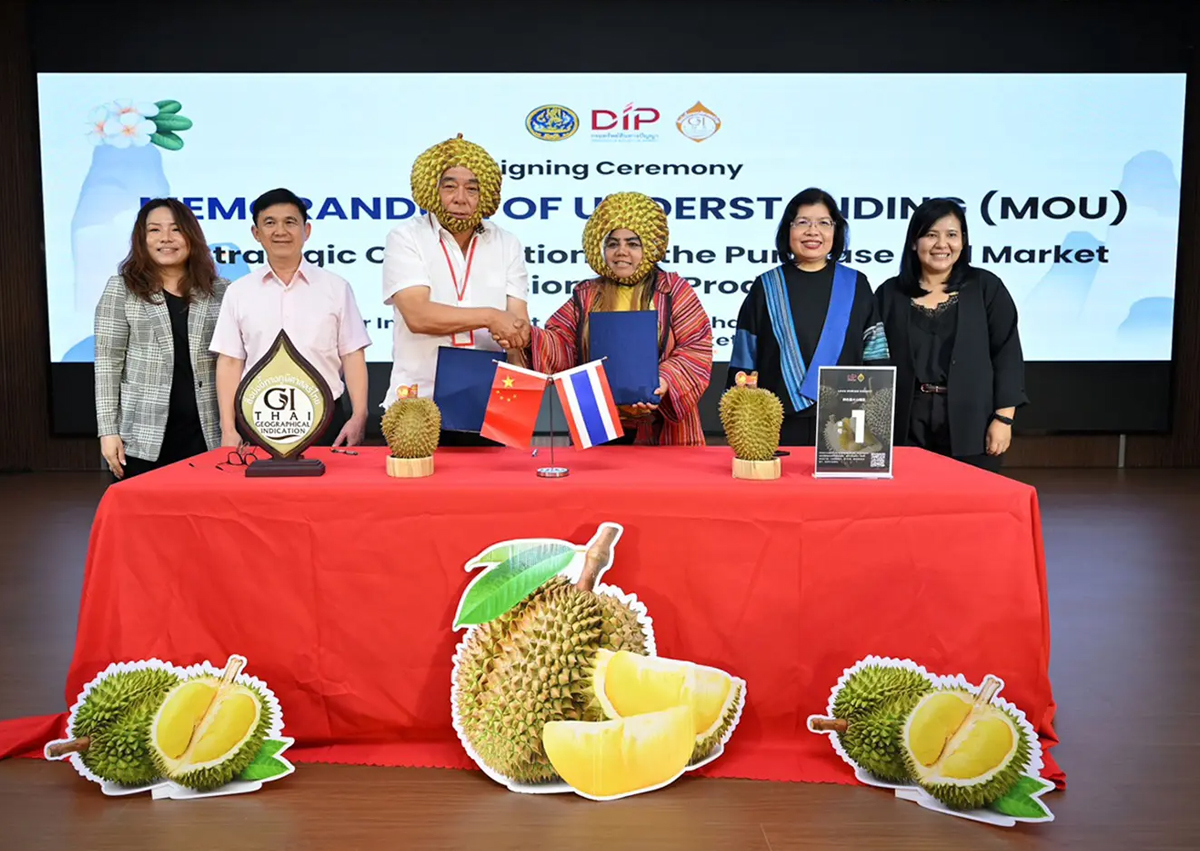
Beyond durian, Tabtim Siam pomelo is emerging as another Thai GI fruit with potential in China.
Pannipa Nilwatchararang, vice-president of the Koh Thuad Municipality Community Enterprise in Nakhon Si Thammarat, noted that the pomelo had attracted growing interest from Chinese businesses after being promoted at a trade exhibition at Muang Thong Thani.
While Chinese consumers have traditionally been more familiar with Thai fruit through durian, interest in Tabtim Siam pomelo is beginning to increase, supported by its sweet flavour and distinctive characteristics.
China nevertheless remains a highly competitive market, with some consumers still strongly influenced by price. Producers therefore need to differentiate the pomelo through quality, production standards and careful selection.
The group is targeting higher-income consumers in Shanghai, with department stores expected to be an important sales channel.
At least three Chinese businesses have expressed interest in negotiations and business-matching opportunities, indicating potential for the pomelo to expand its presence in China alongside established Thai fruit exports such as durian.
“GI products are an important strength in building confidence in product quality. Although their prices are higher than conventional products, exports can still be commercially viable if volumes are managed appropriately, particularly through smaller containers or efficient shipment planning,” Pannipa noted.
China remains an important target for Thai GI products because of the scale of its consumer market and growing demand among middle-class and premium consumers for quality, food safety and traceability.
For Thailand, the challenge will be to translate those preferences into sustained demand by combining product quality with the provenance, identity and local stories that GI certification is designed to protect.