Thailand Advances toward OECD Membership by 2028
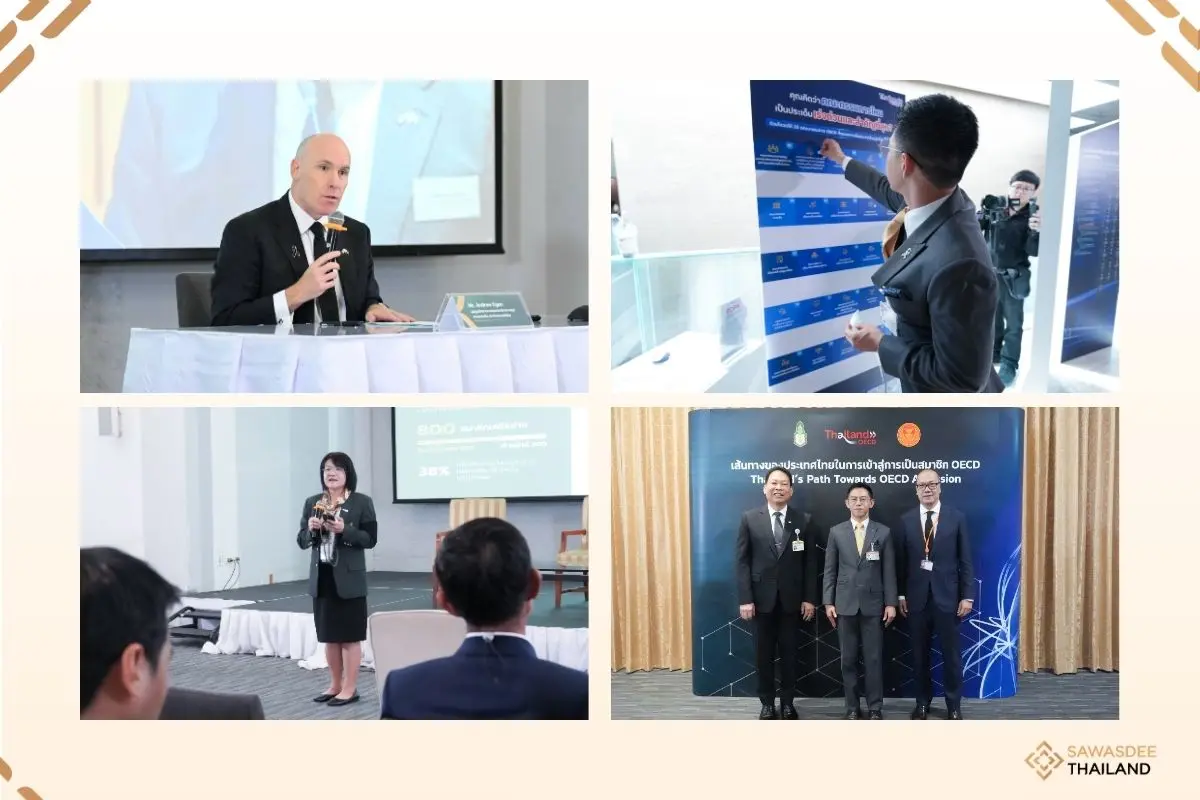
The King Prajadhipok’s Institute, in collaboration with the Secretariat of the House of Representatives and the Secretariat of the Senate, held the seminar “OECD 101: Thailand’s Path to OECD Membership” at Parliament on 19 August 2026. The seminar aimed to enhance members of Parliament’s knowledge and understanding of the Organization for Economic Co-operation and Development (OECD) and Thailand’s membership accession process.
Thailand is currently undergoing the process of joining the OECD, following the submission of its accession request in February 2024. The country is now undergoing a Technical Review by 25 OECD committees. The Government has set a target to complete the accession process by 2028, bringing forward the original target of 2030.
The assessment covers seven key areas: structural economic reform, trade and investment, society and equality, public-sector governance, the environment and climate change, the digital economy, and infrastructure. Each committee will assess the alignment of Thailand’s laws, policies, and practices with OECD standards. The seminar therefore aimed to build Parliament’s understanding of the OECD, as members will play an important role in reviewing and amending legislation, as well as approving the budgets needed to sustain the reform process.
The seminar featured three sessions: an introduction to the OECD and Thailand’s accession process, presented by representatives of key relevant agencies; a case study on the application of OECD standards in Australia, presented by Andrew Egan, Chargé d’Affaires ad interim of the Australian Embassy in Thailand; and a presentation on the role of Thailand’s legislature in supporting the OECD accession process.
OECD membership is expected to create greater opportunities in the economy, trade, and investment, while strengthening Thailand’s competitiveness. In particular, it could boost foreign investor confidence through greater transparency and alignment of Thailand’s tax system with international standards, including the 15% Global Minimum Tax for qualifying large multinational enterprise groups. These measures are expected to promote fair competition and improve the efficiency of government revenue collection.
Source: PR Thai Government