Thailand Plugs into the Global AI Hardware Supply Chain with PCB Investments

Three global PCB makers are adding more than US$668 million in Thai capacity, strengthening the country’s AI, data-centre and electronics ecosystem.
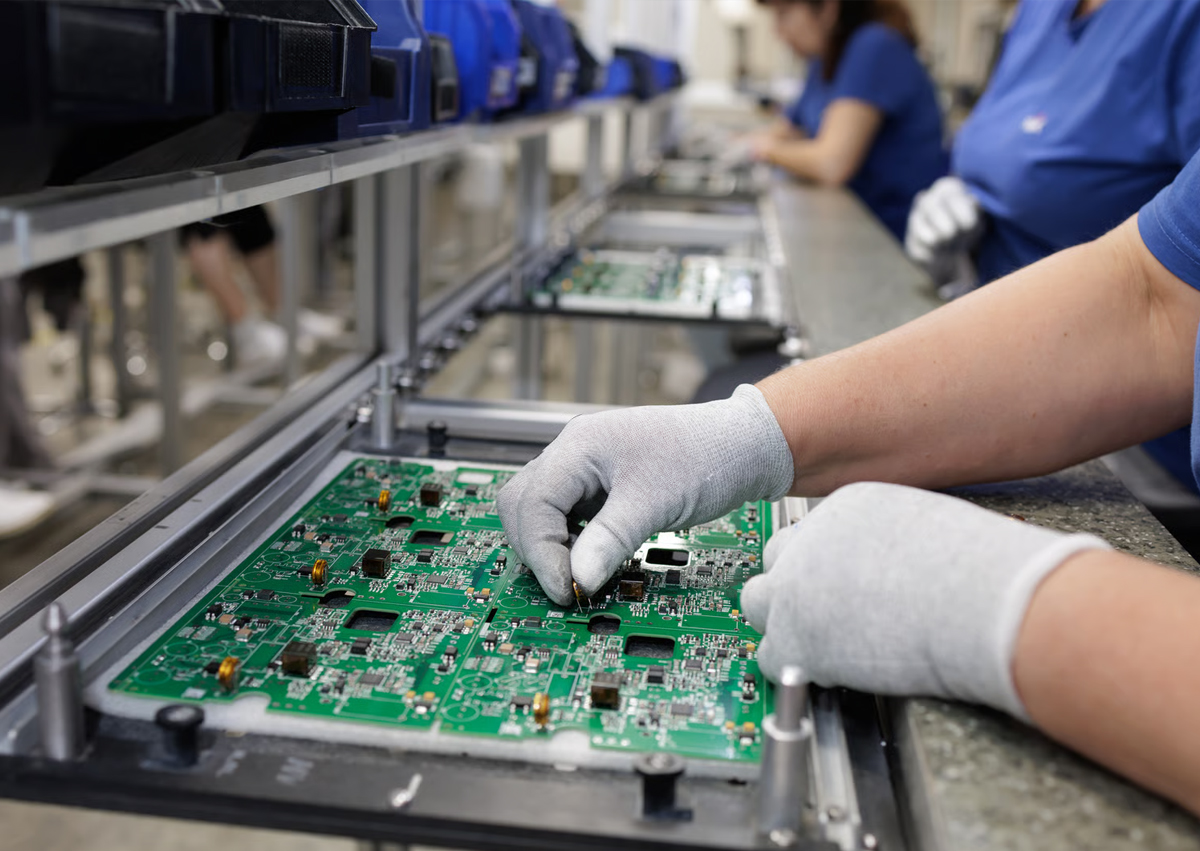
The cloud may seem weightless, but artificial intelligence depends on physical infrastructure. Behind every AI server, high-speed network and data centre lies a complex system of printed circuit boards connecting processors, memory, storage, communications and power-management components.
Thailand is moving decisively into this hardware layer. The Board of Investment (BOI) has approved second-phase expansions by three leading printed circuit board manufacturers, with combined investment exceeding US$668 million and more than 5,000 additional Thai jobs expected. Their first phases had already brought more than US$1 billion into the country and employed over 7,000 people.

Three Investments, One High-Tech Ecosystem
The largest of the latest expansions comes from Compeq Technology, the Taiwan-based global PCB producer. The company will invest a further US$278.56 million at Asia Industrial Estate Suvarnabhumi in Samut Prakan, with the new phase focused on flexible printed circuit boards.
Flexible PCBs are lightweight, space-efficient and capable of bending without damaging their circuitry. They are essential to compact electronics ranging from laptops and smart devices to wearables and Internet of Things equipment. Compeq’s earlier Thai facility also produces advanced multilayer boards for communications, satellites, electric vehicles, data centres and medical devices.
Multi-Fineline Electronics, part of China’s Dongshan Precision group, is investing another US$176.67 million at Rojana Nong Yai Industrial Estate in Chonburi.
Its Thai operation produces multilayer and flexible PCBs for global technology customers in fields including artificial intelligence, data centres, connected devices and electric vehicles. The expansion places Thailand more directly within supply chains serving some of the world’s largest technology companies.
Taiwan’s Gold Circuit Electronics is adding US$219.62 million to its operation at 304 Industrial Park in Prachin Buri. Its integrated activities cover design, research and development, and the production of multilayer and high-density interconnect, or HDI, boards.
HDI technology allows more electronic components to be placed within limited space while supporting faster signals and more efficient energy use. That makes it particularly valuable for advanced communications equipment, premium smart devices and AI servers.
Building the Infrastructure beneath the Cloud
The three projects are part of a much larger investment wave. The latest BOI figures show that PCB and electronic-component investment since 2023 has surpassed US$10.08 billion across 224 projects, driven by manufacturers from Taiwan, China, Hong Kong and Japan.
Thailand’s PCB output exceeded US$5 billion in 2025, establishing the country as Southeast Asia’s leading production base and one of the world’s five largest PCB manufacturing locations, according to the BOI.
This manufacturing surge is arriving alongside rapid growth in Thailand’s digital infrastructure. Investment applications in the digital sector reached about US$34.02 billion in the first half of 2026, led by data centres, cloud services and AI-related infrastructure. In a separate round of approvals, three data-centre and data-hosting projects alone represented investment of approximately US$27.73 billion.
Together, these developments give Thailand an opportunity to build more than server halls. A deeper domestic ecosystem can connect data centres with PCB production, networking equipment, optical components, power electronics, cooling systems, testing services and advanced electronics manufacturing.

Speed and Skills Become Part of the Pitch
Thailand is pairing investment incentives with administrative and workforce development.
The Thailand FastPass mechanism brings eight government agencies together to shorten key approval and licensing procedures by between 20% and 50%. Meanwhile, the Skill Bridge programme is supporting 35 targeted training curricula intended to develop more than 60,000 engineers and technical workers.
The BOI is also advancing a long-term semiconductor and advanced-electronics roadmap under the “Made in Thailand Chips” framework. Its aim is to connect the country’s established strengths in PCB manufacturing with semiconductors, advanced packaging, photonics, smart sensors and higher-value electronics.
That ecosystem was on display at Thailand Electronics Circuit Asia 2026, which brought more than 300 global enterprises and about 7,000 delegates to Bangkok. Its programme covered AI infrastructure, semiconductors, advanced packaging, PCBs, electronics manufacturing services and workforce development.
Thailand’s advantage is increasingly defined not by one factory or investment approval, but by the connections forming among manufacturers, data centres, infrastructure, skills and local suppliers.
By producing more of the hardware that enables AI, Thailand is positioning itself not merely as a user of the next digital wave, but as one of the places where that future is physically built.