Thailand Advances Green Materials with Chromium Pigments from Industrial By-products
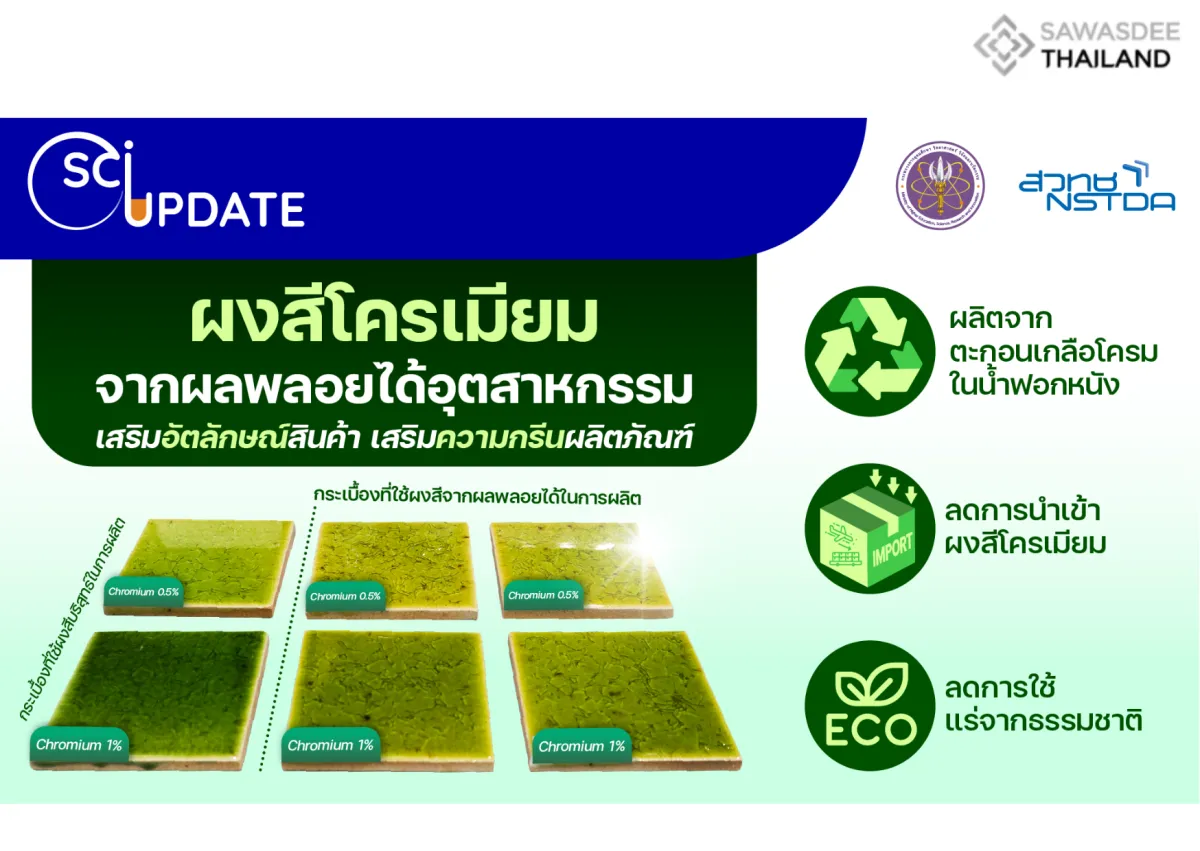
Thailand is strengthening its position in sustainable industrial development through the application of science, technology, and innovation to transform industrial waste into high-value materials. A newly developed process enables the extraction of chromium pigments from wastewater sludge generated by the leather tanning industry, turning an environmental burden into a strategic resource for domestic manufacturing.
The leather tanning sector relies heavily on chromium salts to enhance the durability of leather products, resulting in large volumes of sludge containing residual chromium compounds. Traditionally, this waste requires costly disposal through landfill processes. By developing a method to recover and refine chromium compounds into functional pigments, Thailand demonstrates its capability to address industrial waste challenges while simultaneously reducing production costs and dependence on imported raw materials.
The recovered chromium pigments have been successfully tested in ceramic and tile manufacturing, delivering stable green color tones, high thermal resistance, and performance comparable to commercially imported pigments. Beyond technical performance, the use of recycled industrial by-products supports circular economy principles, enhances the environmental profile of finished products, and adds unique value to Thai-made goods. With the technology now ready for transfer, this innovation highlights Thailand’s growing capacity to lead in green materials and sustainable industrial solutions on a regional and global scale.