Empowering Equality: Thailand’s 2026 Vision for International Women’s Day

Celebrate International Women's Day 2026 in Thailand. Discover the nation’s journey from historic milestones to a future of gender parity and unity.
On 8 March 2026, Thailand has commemorated International Women’s Day with a renewed sense of prestige and purpose. More than a celebratory date, this occasion serves as a profound catalyst for social cohesion, inviting the citizenry to reflect upon the enduring contributions of women to the Thai identity. Let’s explore Thailand’s journey as one of shared triumph, transitioning from a localized celebration to a tribute to the global movements that first sowed the seeds of parity.
The Global Foundation: From New York to Copenhagen
The path toward modern equality finds its genesis far beyond the Kingdom’s shores, rooted in the intrepid spirit of the early 20th century. This global epoch was punctuated by the 1908 New York protests, where textile workers rose to emancipate themselves from harsh industrial working conditions that had long prioritised production over human dignity. This momentum reached a crescendo at the 1910 Copenhagen conference, led by the visionary Clara Zetkin—the "Mother of the International Women’s Movement"—who formalised the 8th of March as a day dedicated to the global advancement of women.
This movement was defined by three fundamental demands that shook the foundations of the contemporary production model, often referred to as the iconic "8-8-8" framework:
- Eight Hours of Labour: A revolutionary demand to curtail exhausting shifts and restore human dignity to the workplace.
- Eight Hours of Education: Advocating for the right to self-improvement and intellectual pursuit.
- Eight Hours of Rest: Ensuring the fundamental right to well-being and personal recovery.
These milestones established a universal benchmark for women's rights, providing the indispensable blueprint that eventually bolstered Thailand’s own legislative and social progress.

Thailand’s Institutional Journey: 1989 to the Present
Thailand’s institutional dedication to gender synergy achieved a significant milestone on 8 March 1989, with the formal establishment of the National Commission on Women's Affairs. Demonstrating the Kingdom’s top-tier governmental commitment, this body was originally housed within the Office of the Permanent Secretary to the Prime Minister.
As a proactive member of the United Nations, Thailand has consistently honoured its commitment to international treaties, elevating the nation’s standing as a distinguished leader in Southeast Asian equality. This journey has transitioned from early advocacy into a sophisticated landscape of modern legal frameworks. By integrating these global standards into the national programme, Thailand ensures that women are not merely participants but architects of the country’s economic and social prosperity.

Strengthening women’s education, health and representation across Thai society
Thailand’s approach to promoting women’s rights is increasingly built around “gender mainstreaming”: embedding equality goals into public policy on education, work, health, safety, and representation, supported by regular monitoring led by the Department of Women’s Affairs and Family Development. Recent official snapshots show why this matters. Women slightly outnumber men in Thailand’s population—51.21% in the 2024 report and 51.26% in the 2025 report—so progress on women’s rights directly shapes national wellbeing.
Education is a key success story. Women’s literacy rose to 94.6% in 2025, and female students comprised 59.76% of all higher-education students, signalling strong access to learning and credentials. Digital inclusion is also advancing: women accounted for 43.8% of Thailand’s ICT workforce in 2025, up from 41.6% in 2024.
On leadership, women’s representation is also improving. Women held 14.70% of Cabinet posts in the 2024 report, rising to 22.2% in the 2025 report, while women remained 19.2% of MPs. In health policy outcomes, women’s life expectancy is around 80 years versus 71.9 for men, and the maternal mortality figure fell to 19.29 (88 deaths) from 21.40 (107 deaths) in 2024—signs of strengthening maternal care.
Ensuring safety remains a key priority in Thailand’s gender-equality agenda. In 2025, 16,890 domestic-violence cases received formal support services (around 46 per day), with women comprising 89.45% of those assisted. These figures reflect both increased access to reporting mechanisms and the continued strengthening of prevention, survivor support, and justice systems.

Symbols of Strength: The Yellow Mimosa and National Celebration
The 2026 celebrations are visually punctuated by the vibrant Yellow Mimosa. This blossom is the official emblem of the day, chosen for its remarkable ability to flourish amidst the rigours of winter. This resilience mirrors the character of the modern Thai woman—possessing a gentle exterior but an unyielding strength that thrives regardless of the climate.
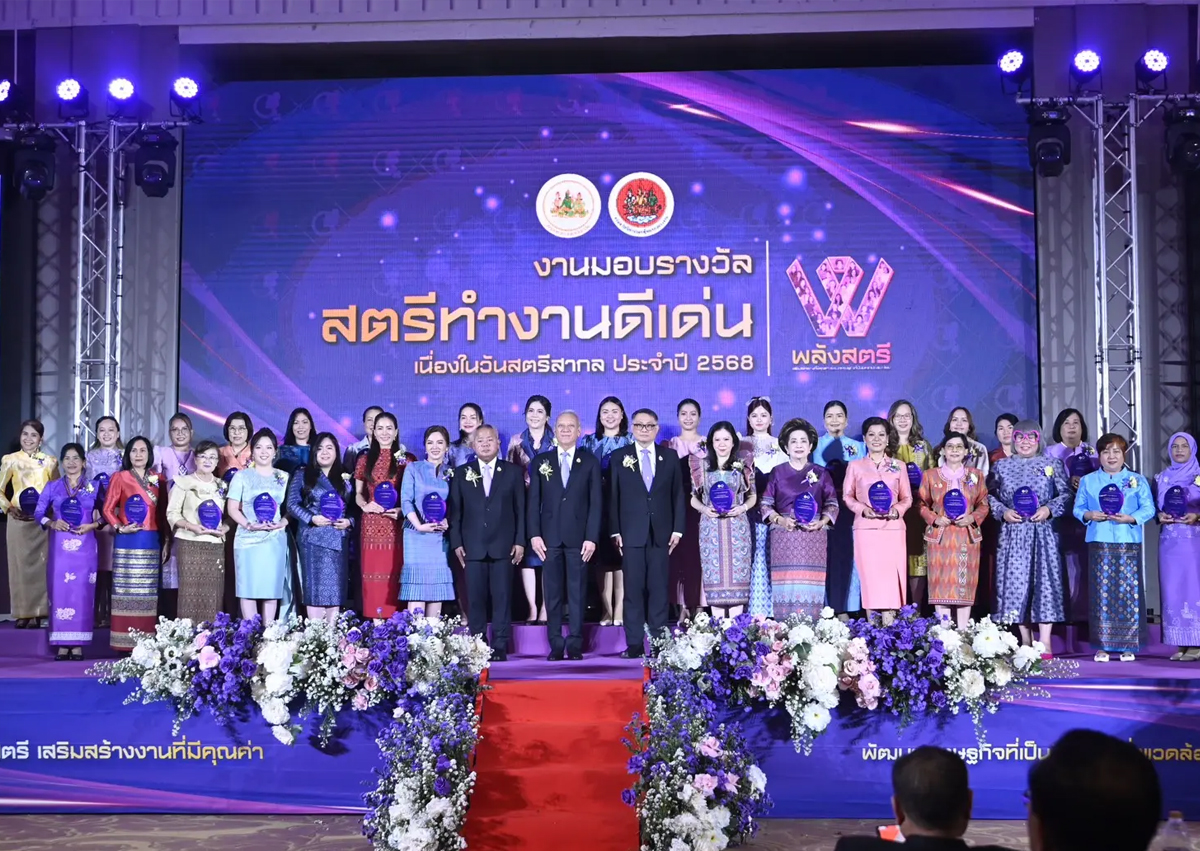
National recognition remains a cornerstone of the celebration, exemplified by high-profile accolades such as the "Outstanding Woman of the Year" awards. By naming luminaries such as Khun Ying Dr Pornthip Rojanasunan or Pavena Hongsakula, the nation provides tangible role models that inspire the next generation of leaders. These awards, alongside the ubiquitous mimosa, reinforce a national psyche that values the indispensable role of women in the Kingdom's continued harmony.
The Path Forward
International Women's Day 2026 stands as a testament to Thailand’s transformative journey. By successfully integrating the lessons of history with a refined pursuit of equity, the nation has strengthened its framework for advancing gender equality in line with global standards. This dedication to equality is more than a social ideal; it is the foundation of a stable and prosperous future. As Thailand moves forward, its commitment to the power of equality ensures a society that is as brilliant and resilient as the mimosa, securing a harmonious path for all citizens.