Industrial AI Powers Thailand’s Next Manufacturing Shift
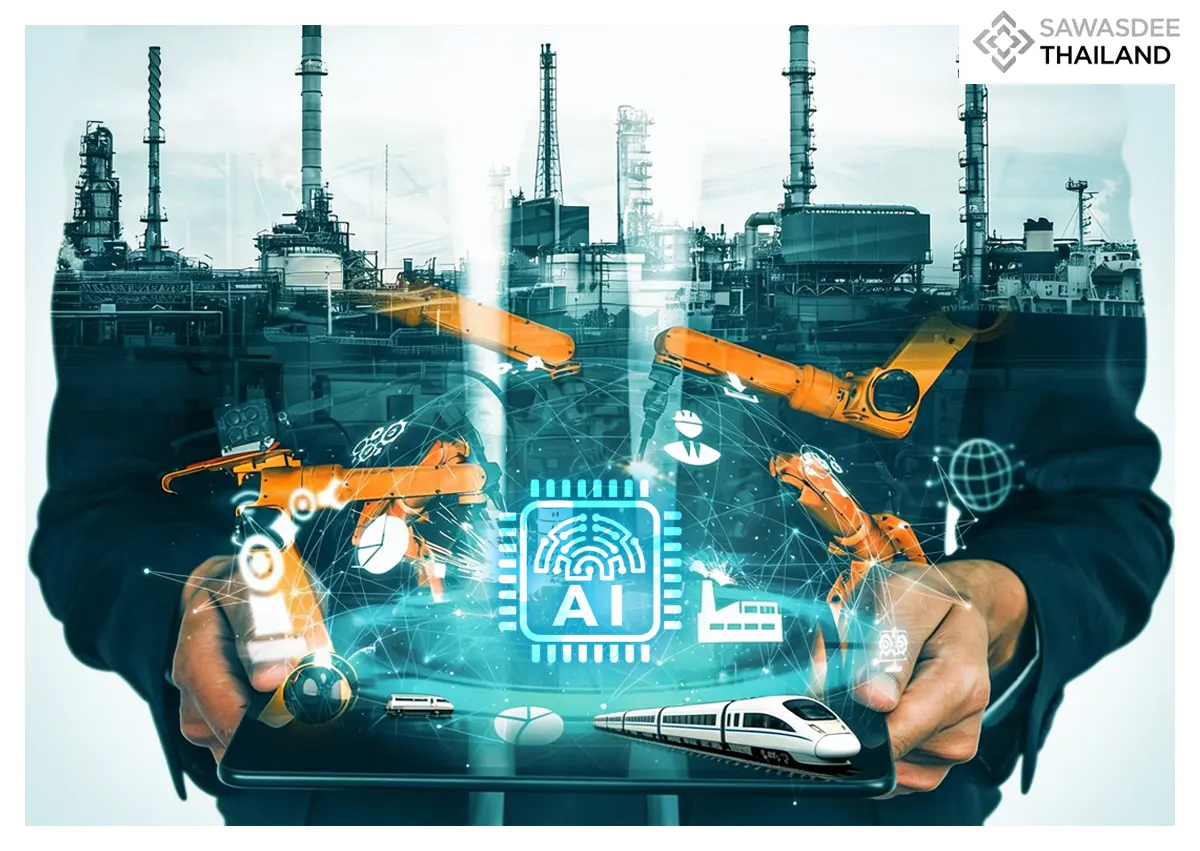
Industrial AI is emerging in Thailand’s factories, rail systems and EEC smart-city projects as rising investment adds new operational complexity.
Thailand’s next industrial upgrade may not be defined only by new roads, railways, factories and smart cities, but by how intelligently they can be designed, operated and maintained.
As the country accelerates investment in infrastructure, manufacturing and smart-city development, industrial systems are becoming more complex. At the same time, artificial intelligence is beginning to move beyond data processing and general office tasks into engineering decisions, operational planning and real-world industrial environments.
Thailand is pushing ahead with several major investment streams. These include more than US$7.50 billion in transport infrastructure investment during 2025-2026, the US$39.71 billion smart city project in the Eastern Economic Corridor (EEC), and a digital transformation market projected to reach US$19.22 billion by 2033.
As industrial projects become larger and more interconnected, manufacturers and infrastructure operators are facing new operational demands. More complex systems, growing demand for specialised engineering expertise, sustainability requirements and the need to manage data across multiple platforms are increasing demand for technologies that can integrate data and support operational decision-making.
Industrial AI meets the demands of modern industry
Venkat Balasubramanian, Industry Process Consulting Director for South Asia Pacific at Dassault Systèmes, noted that most corporate AI use still centres on language models and general-purpose AI assistants.
Industry, however, needs a different kind of intelligence. Manufacturers, transport operators and engineering teams require AI that can connect data from business systems, assets and real operating conditions, while supporting analysis within engineering constraints.
This is where industrial AI is gaining attention. Unlike general AI tools, which focus mainly on language and text-based information, industrial AI is designed for engineering systems and operational processes.
It can link data from workflows, assets and the physical environment, helping organisations assess the impact of changes before decisions are made.

Factories and rail projects offer key opportunities
For Thailand’s manufacturing sector, especially automotive and electronics, Dassault Systèmes sees major potential in platforms such as 3DEXPERIENCE and Virtual Companions.
These systems can connect engineering data, operational information and real-time sensor data, allowing manufacturers to simulate production-line changes, test operating models and plan maintenance before adjustments are made on the factory floor.
Rail and transport are another important area. Thailand is moving forward with large projects such as the Thai-Chinese high-speed railway, the EEC’s three-airport rail link and mass-transit systems in Bangkok.
In these projects, managing technical requirements and tracking the impact of changes across the project lifecycle are seen as key use cases for industrial AI.
The same systems can also support knowledge management across projects, continuous impact assessment and design modelling that remains aligned with engineering requirements.
Dassault highlights business gains from industrial AI
Dassault Systèmes reports that industrial AI can deliver measurable business results across several areas, including:
- Accelerating processes from development to operation by 15-50%.
- Reducing production process time by 25%.
- Cutting manufacturing and project management costs by 5-40%.
- Reducing quality problems by 30-90% by detecting errors earlier.
- Increasing revenue by more than 10% through higher productivity and operational efficiency.
National AI plan sets targets for skills and adoption
Thailand’s AI policy framework is built around the National AI Strategy and Action Plan for 2022–2027, which supports the Thailand 4.0 development agenda and the country’s ambition to establish itself as a regional AI hub.
The plan is organised around five strategies. The first focuses on preparing society for AI by raising awareness of ethical, legal and regulatory issues. Its targets include increasing awareness of AI law and ethics among at least 600,000 people and establishing an enforceable legal and regulatory framework.
The second strategy covers sustainable AI infrastructure. Thailand aims to rank among the world’s top 50 countries in the Government AI Readiness Index and increase annual investment in digital infrastructure supporting public- and private-sector AI development by 10%.
Under the third strategy, the country plans to produce more than 30,000 AI professionals over six years. The fourth seeks to strengthen research and innovation by developing at least 100 AI prototypes and generating economic and social benefits worth at least US$1.42 billion by 2027.
The fifth strategy promotes broader adoption across government agencies, established businesses and start-ups, with a target of at least 600 organisations using AI-based innovations.
Government links AI to its wider economic strategy
AI also features in three of the five economic strategies announced by Prime Minister Anutin Charnvirakul’s government to help Thailand move beyond the middle-income trap and achieve sustainable growth.
Under its inclusive-growth strategy, the government plans to support SMEs and lower-income groups while broadening access to digital and AI skills. It also intends to give Thai SMEs greater opportunities in public procurement through the Made in Thailand initiative.
A second strategy seeks to restructure the economy around future industries, including digital technology, AI, robotics, semiconductors and clean energy. The government also plans to strengthen universities as innovation centres, support deep-technology development, reduce reliance on imported technology and establish a matching fund to help Thai start-ups expand internationally.
In agriculture, the government aims to accelerate the transition towards precision farming by applying AI and big data to production planning and weather forecasting. The policy forms part of a broader effort to improve productivity, control costs and strengthen Thailand’s role in food security.
Skills and industry links key to wider AI adoption
As industrial AI adoption expands, developing specialised talent in advanced simulation, Digital Twin technology and digital engineering will be key to supporting wider implementation across industries.
Balasubramanian said stronger links between academia and business could help develop the technical workforce needed to support industrial AI. He also noted that simulation and Virtual Twin tools could be introduced during the planning and design stages of industrial and infrastructure projects.
Thailand’s progress will ultimately depend on whether it can translate its national AI policies into practical applications across manufacturing, transport, agriculture, engineering and public services.