From Uranium Hunts to Jurassic Giants: Why Thailand is 2026’s Ultimate Dinosaur Destination

Celebrate 50 years of Thai palaeontology in 2026. From Khon Kaen to the Year of the Dinosaur, explore a 140-million-year legacy in the heart of the Isan plateau.
As Thailand marks a half-century of palaeontological wonder, the nation prepares for 2026: a grand celebration of the titanic giants that once roamed the Isan plateau, bridging ancient Mesozoic strata with a vibrant, high-value future of global geo-tourism.
Half a Century of Discovery: The 2026 Milestone
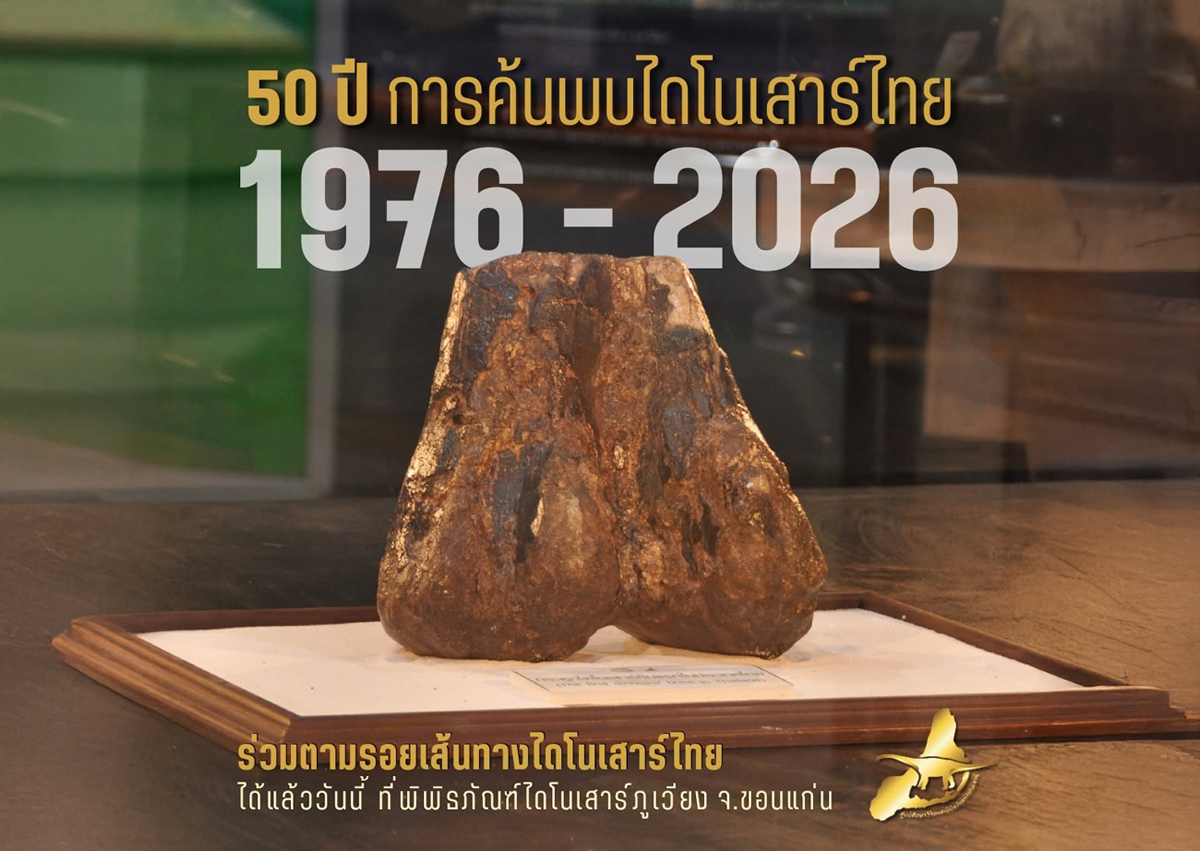
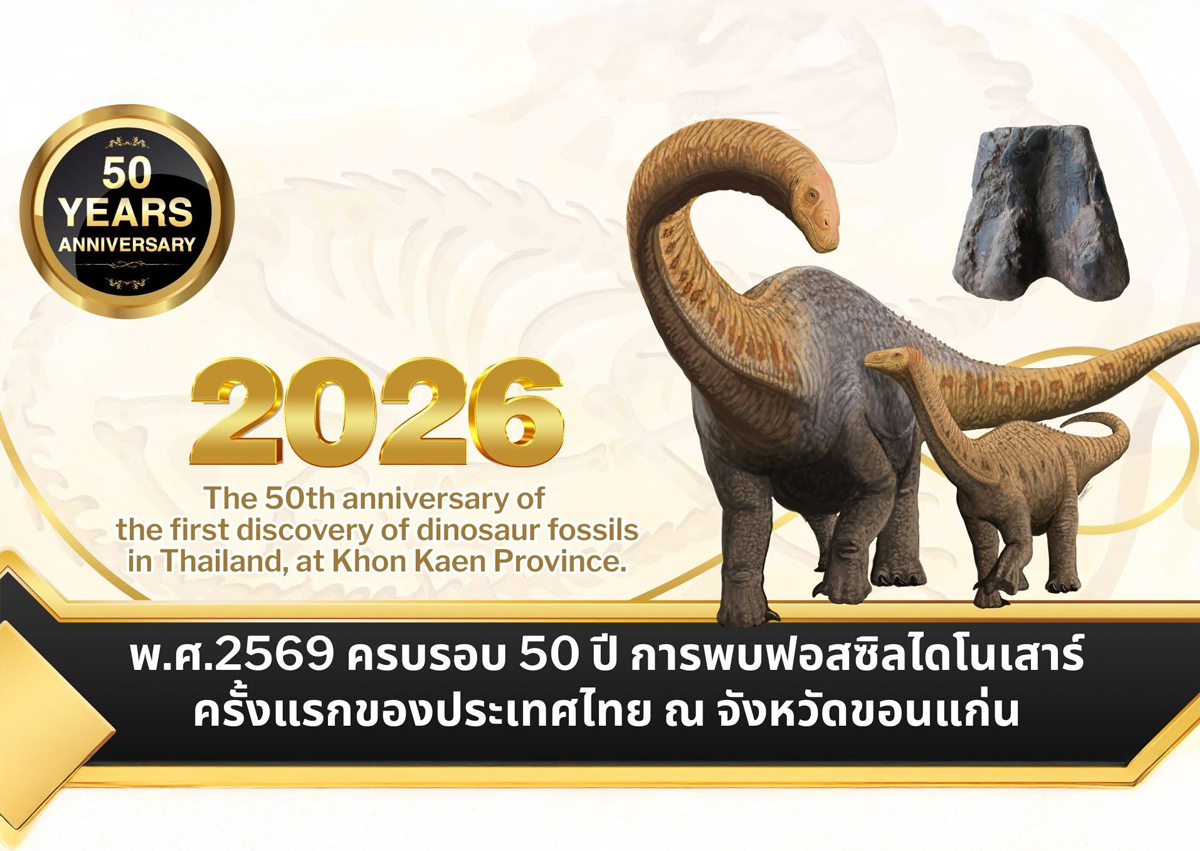
The year 2026 represents far more than a chronological marker; it signifies a national coming-of-age for Thai science. This golden jubilee commemorates the 1976 discovery of the nation's first dinosaur fossil in the Phu Wiang Valley of Khon Kaen. It is a moment to reflect on how a serendipitous search for energy transformed Thailand into a prestigious sanctuary of prehistoric heritage.
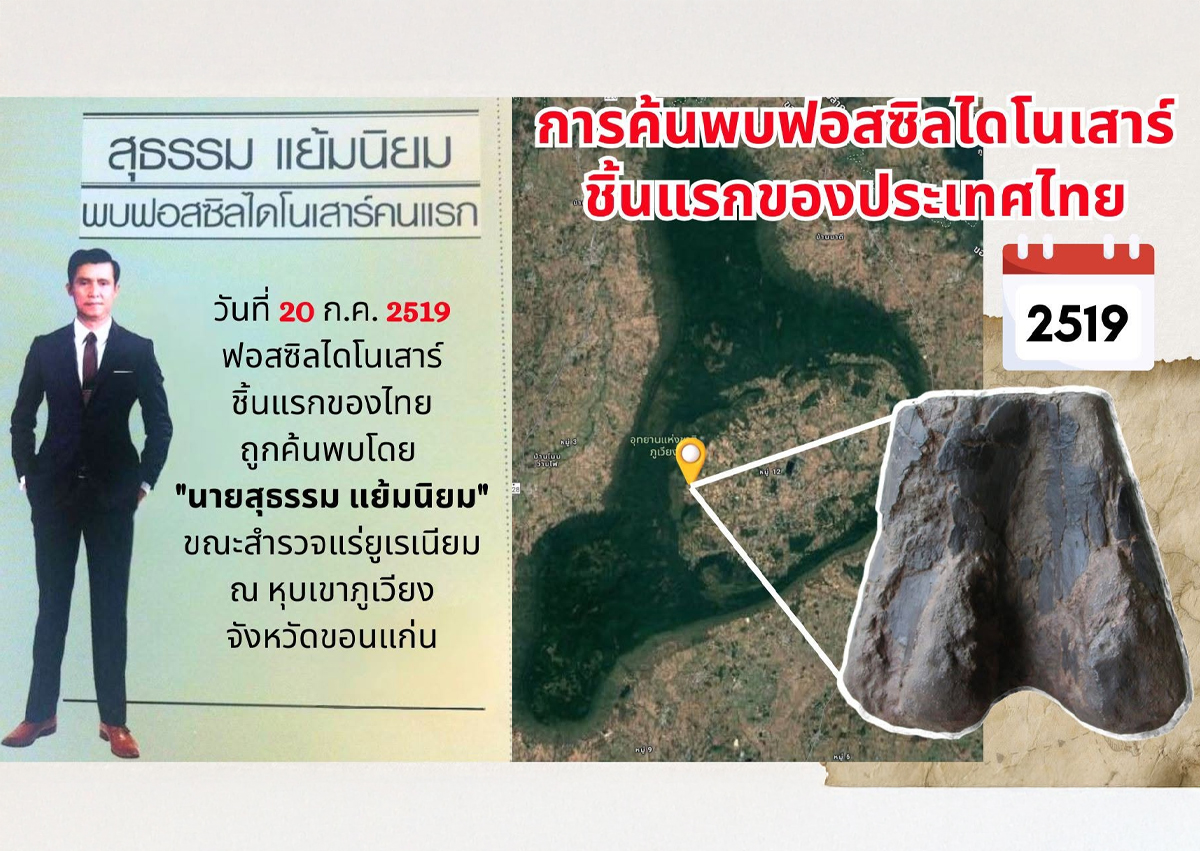
The narrative began not with a quest for bones, but with a fifteen-year exploration for uranium. In a poetic twist of irony, the search for radioactive minerals ultimately proved economically unviable due to low-grade deposits. However, what failed as an energy pursuit birthed a priceless scientific legacy. In 1976, geologist Sudham Yaemniyom discovered a titanic femur emerging from the red Isan silt at Huai Pratu Ti Ma. Later confirmed by French experts as a sauropod, this find led to the identification of Phuwiangosaurus sirindhornae—the first major species found at Site 1—shifting Thailand’s trajectory from extractive mineralogy to world-class palaeontological research.
New Frontiers: From Khon Kaen to Chaiyaphum
The momentum of the mid-seventies has only accelerated, with ongoing field research ensuring Thailand maintains a competitive edge in global science. Recent investigations at Ban Panang Sua in Chaiyaphum have unveiled the remains of a formidable carnivorous theropod, proving that the Mesozoic secrets of the Northeast are far from exhausted.
Furthermore, the naming of Nagatitan chaiyaphumensis stands as a profound testament to the region's unique biodiversity. These are not merely isolated relics; they are essential connective pieces in a prehistoric puzzle. By formalising these discoveries, researchers are cementing the Isan region’s reputation as a "Dinosaur Corridor," a landscape where every layer of sediment tells a story of an ancient, lost world.
50 Years of Prehistoric Wonders
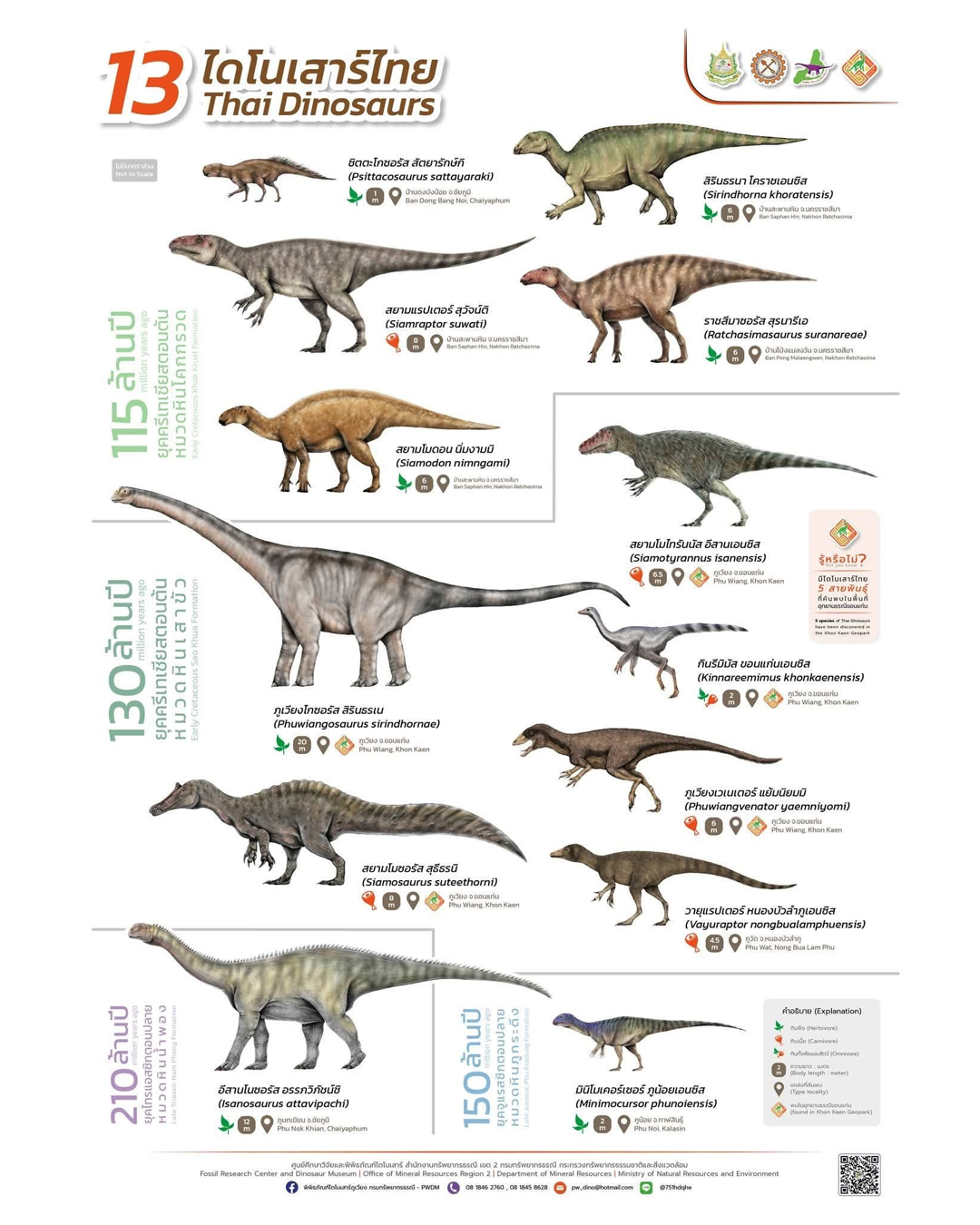
Since the monumental first discovery of a dinosaur fossil in the Phu Wiang Valley in 1976, Thailand has transformed into a premier destination for palaeontological research. Over the past five decades, systematic excavations—initially sparked by uranium exploration—have unveiled a rich prehistoric legacy across the Khorat Plateau. At least 25 species have been discovered in the country, including 14 species new to science:
- Siamosaurus suteethorni
- Psittacosaurus sattayaraki
- Phuwiangosaurus sirindhornae
- Siamotyrannus isanensis
- Isanosaurus attavipachi
- Kinnareemimus khonkaenensis
- Siamodon nimngami
- Ratchasimasaurus suranareae
- Sirindhorna khoratensis
- Phuwiangvenator yaemniyomi
- Vayuraptor nongbualamphuensis
- Siamraptor suwati
- Minimocursor phunoiensis
- Nagatitan chaiyaphumensis
From Thai Research Capacity to the Fukui Model
Thailand’s drive to turn dinosaur discoveries into scientific, educational and tourism assets begins with stronger domestic capacity. The Department of Mineral Resources, supported by the Fossil Management Fund, is promoting fossil surveys, conservation, museum development and public learning. It is also connecting government specialists, universities and local communities while attracting Thai and international palaeontologists for joint excavations and research. Funding, training and museum-based education will help develop young researchers, fossil preparators and science communicators.
Thailand will then expand cooperation with Japan under the Thai-Japan Technical Cooperation 2022-2027 framework, covering joint fieldwork, exchanges of fossil data and specimens, museum management and researcher development.
The Fukui Model will serve as Thailand’s benchmark. Fukui integrates excavation sites, university research, professional training, museum exhibitions and regional tourism, helping its dinosaur museum attract around one million visitors a year. Thailand aims to adapt this approach for Sirindhorn Museum in Kalasin and other fossil museums, transforming them into international centres for research, learning and community-based tourism.
The "Thai-Japan Technical Cooperation 2022-2027" framework facilitates:
- Exchanges of joint research and rigorous field explorations.
- The standardisation of fossil data and specimens for comparative global study.
- Advanced museum management and international curation techniques.
- The cultivation of a new generation of researchers and scientific communicators.
2026: The Creative Dinosaur and Geopark Tourism Festival
The strategic vision for the 50th anniversary extends into the realm of "soft power." By embedding a "Dinosaur Identity" into the DNA of Khon Kaen and Kalasin, the government aims to create a sustainable economic engine for the Northeast. In December 2026, the "Creative Dinosaur and Geopark Tourism Festival" will launch, reimagining the Siamese giants through contemporary culture.
The festival programme promises a vibrant array of festivities:
- Dinosaur Kingdom Theme Parks: Immersive time-travel journeys back 140 million years.
- Dino Gastronomy: Sophisticated culinary tributes to the prehistoric era.
- Dino Fashion Runways: Where ancient history meets avant-garde style.
- Dino Dance Battles & Music Festivals: Bridging the gap between ancient heritage and modern youth culture.
A Future Written in Stone
The 50th anniversary is both a reflection on a proud history and a launchpad for a prestigious future. As the failed uranium surveys of the 1970s fade into memory, they leave behind a legacy of scientific excellence that has redefined the nation's identity. Thailand is no longer just a site for discovery; it is a global leader in geo-tourism.
As we look toward 2026, we remember that while the first five decades have been recorded in the annals of history, the next page of the story is currently being written by a new generation of Thai researchers. Their work ensures that the Siamese giants will continue to inspire wonder for centuries to come.