2026 IMF - WBG Annual Meetings: AI Set to Transform the World, Accelerate Scientific Progress and Drive Economic Growth
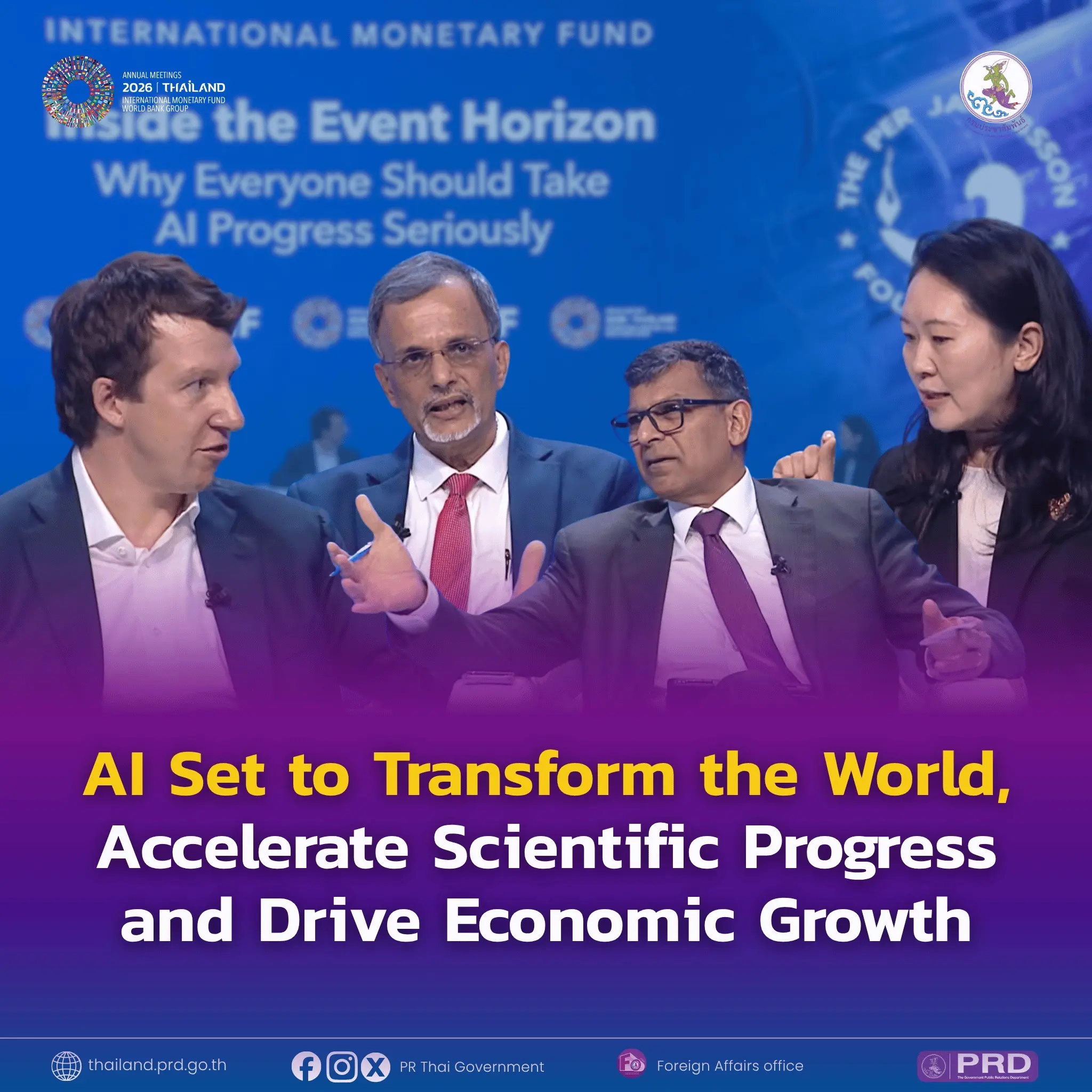
🔹2026 IMF - WBG Annual Meetings: AI Set to Transform the World, Accelerate Scientific Progress and Drive Economic Growth
This afternoon (17 October 2026), a discussion titled “Inside the Event Horizon: Why Everyone Should Take AI Progress Seriously” was held as part of the 2026 IMF - World Bank Group Annual Meetings. The session explored the rapid advancement of artificial intelligence (AI) and its implications for the global economy, scientific progress, labour markets, and public policymaking.
The keynote address was delivered by Jack Clark, Co-founder of Anthropic, with insights from Yan Shen of Peking University and Dr. V. Anantha Nageswaran, Chief Economic Adviser to the Government of India. The discussion was moderated by Raghuram Rajan, Professor at the University of Chicago and former Chief Economist of the IMF.
Jack Clark highlighted AI’s potential to accelerate scientific and technological progress, with applications ranging from solving mathematical problems and advancing biological research to drug discovery and laboratory automation. These developments could boost productivity and unlock new innovations. However, they also present challenges, including cybersecurity risks, labour-market disruption, and the need for appropriate governance measures to ensure that AI is used safely and effectively.
Yan Shen discussed the adoption of AI in China across manufacturing, business operations, and healthcare, highlighting its potential to improve efficiency and create new economic opportunities. Meanwhile, Dr. V. Anantha Nageswaran emphasized that countries do not need to lead frontier AI development to benefit from the technology. By adopting cost-effective AI solutions and expanding their use across sectors, countries can unlock new opportunities while investing in workforce skills and creating jobs suited to a changing economy.
🌎 The speakers also underscored the importance of international cooperation in establishing AI safety standards, promoting transparency, and strengthening governance to address cross-border risks. They called for education systems to foster creativity, critical thinking, curiosity, and ethical reasoning, alongside preparing workers for the changing world of work. While AI could become a major driver of scientific advancement and global economic growth, ensuring that its benefits are shared widely and sustainably will require human judgment, forward-looking policies, and cooperation across the international community.