Reflections on Time, Taste, and Tradition
Time has turned into a luxury, reserved for those who can afford it. Today, eating is polarized, either a quick takeaway consumed on-the-go or an elaborate session of fine dining. Yet, amid this rapid transformation, Thailand’s culinary heritage and timeless delicacies continue to offer a pause, an invitation to savor tradition, craftsmanship, and excellence on every plate.
In recent decades, many have turned to fast food and quick takeaways for convenience and affordability. In March 2025, Bloomberg reported a 15% surge in takeaway options over dining-in. Yet, this ease comes at a cost, diminishing the joy of eating. This trend also affects traditional Thai cuisine, which often relies on freshness, balance, and immediate consumption. Many Thai dishes are best enjoyed straight from the wok or pot, where texture, aroma, and temperature come together harmoniously. When taken home or reheated, the flavours dull, ingredients lose their intended texture, and the experience that embodies Thai culinary identity such as communal eating, and sensory balance, is lost.
In contrast, fine dining restores a lost appreciation for food, celebrating craftsmanship and creativity in every dish. Thai restaurateurs have recently redefined this experience, blending local ingredients with modern techniques and earning global recognition, including Michelin stars and guide (Bangkok Post). However, such culinary artistry remains a luxury, restricted by high prices and limited reservations, which few can regularly access. This exclusivity is reflected in the modest 1.1% growth projected by K-Research, highlighting that while the demand for fine dining exists, it remains accessible to only a small segment of the population.
Despite the divide between rushed convenience and exclusive fine dining, I found myself reflecting on this summer’s return to Bangkok. Whether wandering through Soi Nana near Chinatown or sitting by a street vendor in Thonburi, I was struck by the city’s quiet beauty—the hum of traffic, the chatter of crowds, and the orange-blue glow of the Chao Phraya at dusk. I cherished the warmth of the aunties and uncles serving their customers, and as I savoured dishes made from recipes passed down through generations, I was reminded that Thai food is not meant to be rushed. Its preparation demands time—slow simmering, careful seasoning, and attention to balance—while its enjoyment calls for presence. From an economic perspective, street food businesses with storefronts are projected to reach 261 billion baht in 2025, reflecting 4.7% growth (Bangkok Post). This reflects a global truth: when food is affordable, accessible, and crafted with care, the experience of flavour and tradition becomes universally unforgettable.
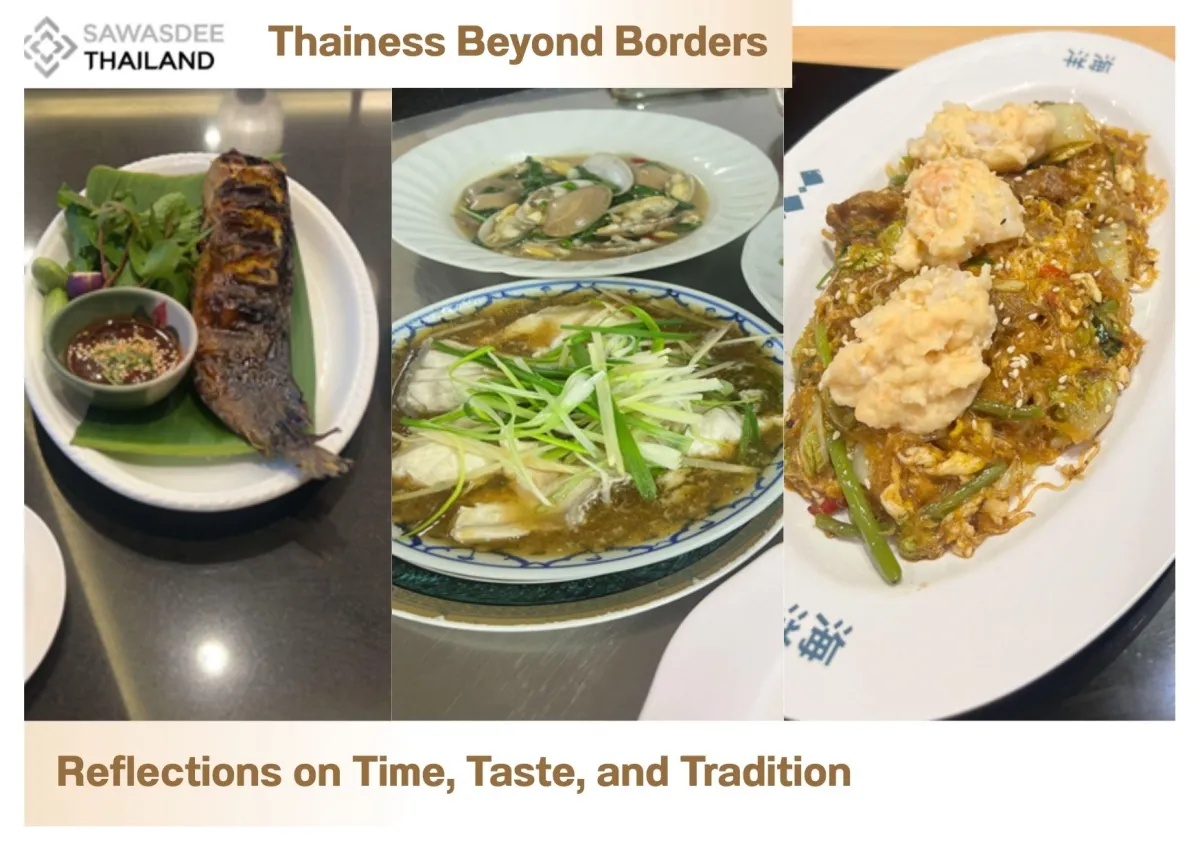
At this point, one might still wonder how Thai food offers a pause in our rushed world. Take a look at the picture below. Whether it’s well-seasoned sour pork, perfectly grilled catfish served with a traditional Isaan dip, spicy larb, nam prik num (tartare-like aubergine dip), or Thai-Chinese dishes like soy-glazed steamed grouper, wok-fried morning glory, and clams tossed in garlic, fish sauce, and basil—or even a comforting plate of suki haeng (Thai-style stir-fried vermicelli)—each dish embodies patience, precision, and respect for ingredients. The brief wait is a quiet reminder that good food takes time, and that patience rewards us with flavours that linger far beyond the meal. Beyond taste, this experience reinstates why Thailand remains a global destination for culinary excellence: it is a place where food is not merely consumed, but celebrated, and where every dish tells a story of culture, craftsmanship, and tradition that cannot be replicated elsewhere.
Story by Pongvith Amornworasin