Thailand's Food Scene Defies Global Headwinds as Street Food Tops Market Value
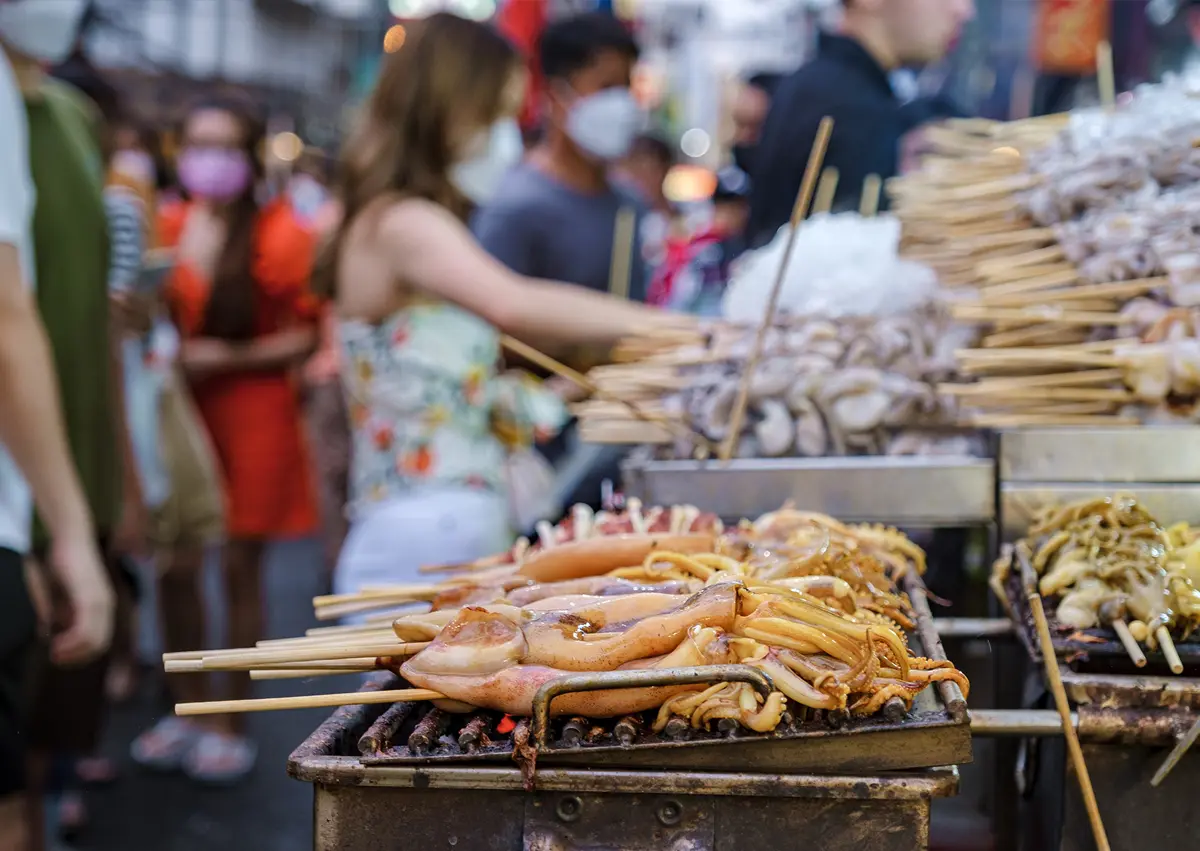
From Bangkok's roadside stalls to the rapid rise of quick-service chains, Thailand's foodservice sector is outgrowing the world — and attracting fresh attention from international suppliers.
Thailand's foodservice industry outpaced global growth in 2025 and is on course to maintain that momentum through the end of the decade, according to new research from Deloitte, as the sector shifts from post-pandemic recovery into a more structurally mature phase.
The country's foodservice market reached a value of €26.8 billion (approximately US$31.5 billion / 1.015 trillion baht) in 2025, growing at 4.1 per cent compared with the previous year — nearly double the global average of 2.2 per cent.
That global figure, drawn from Deloitte's forthcoming Foodservice Market Monitor 2026, places the worldwide market at approximately €2.98 trillion (approximately US$3.5 trillion / 112.8 trillion baht), with Europe leading regional growth at 6.0 per cent and Asia-Pacific at 3.2 per cent.
Street Food Holds Its Ground
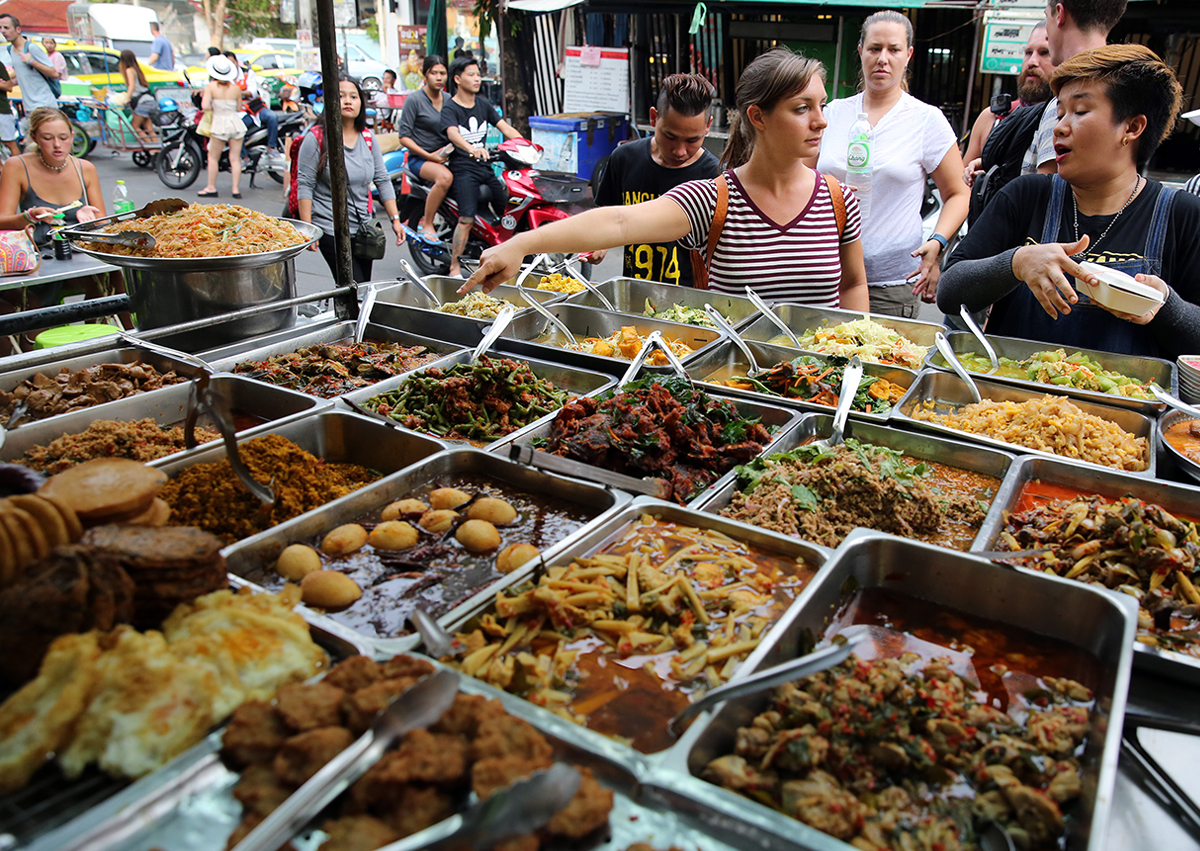
Despite the rapid expansion of international quick-service restaurant (QSR) chains, Thailand's street food segment retained its position as the single largest contributor to market value in 2025, generating over €8.79 billion (approximately US$10.3 billion / 332.1 billion baht).
The figure underscores the enduring commercial weight of an informal dining culture that has long defined Thai urban life — and increasingly draws the interest of organised supply chains seeking access to high-volume, high-frequency consumption.
Street food and QSR are now identified as the two fastest-expanding segments in the Thai market, a pairing that reflects a broader trend across North America and Asia-Pacific, where informal and quick-service formats are reshaping how and where consumers spend on food.
The QSR Effect
The QSR category recorded a growth rate of 5.1 per cent in Thailand last year, outpacing even the broader sector's strong performance. Deloitte expects the format to remain among the fastest-expanding segments in the coming years, driven by its capacity to combine operational efficiency with consistent customer experience — qualities that are proving especially attractive as input costs rise and labour markets tighten.
Tommaso Nastasi, a partner at Deloitte, argued that the channel's growing appeal extends well beyond consumer-facing metrics.
"The expansion of formats, with QSR playing a pivotal role, and the increasing penetration of chain operators are enabling suppliers not only to streamline commercial efforts and optimise cost-to-serve, but also to engage in co-development initiatives, delivering more tailored offerings and ultimately generating greater value across the ecosystem," he said.

A Market in Structural Transition
The findings point to a sector moving beyond recovery and into what Deloitte describes as a "new normal" — one defined less by bounce-back growth and more by operational discipline, format innovation and tighter supply chain integration.
Globally, that transition is being shaped by shifting consumer expectations on multiple fronts. Premium packaging has emerged as an unexpectedly powerful driver of delivery growth, with nine in ten consumers indicating they would order a wider variety of dishes when premium packaging is on offer, and more than half willing to pay a price premium for it. Value for money, meanwhile, has reasserted itself as a central concern, reflecting the persistent pressure of elevated living costs across major markets.
On the supply side, the off-premises boom is prompting operators to rethink their physical formats: 41 per cent of operators are planning dedicated spaces for delivery and takeaway, whilst 34 per cent of QSR operators are focusing on takeaway-only locations.
Automation is also spreading rapidly, with nearly three-quarters of operators now introducing technology to improve productivity — though only 28 per cent currently report tangible benefits to profitability, suggesting the gains from digitisation remain, for many, a work in progress.
For Thailand, the outlook remains broadly positive. With street food anchoring market value, QSR driving volume growth and international buyers circling, the country's foodservice sector appears well placed to sustain its outperformance — even as the global operating environment grows more demanding.
Source: Deloitte Foodservice Market Monitor 2026, as presented at TUTTOFOOD, Milan, April 2026.
Euro figures converted to US dollars at EUR/USD 1.1748 and to Thai baht at USD/THB 32.22, as of 9th May 2026.