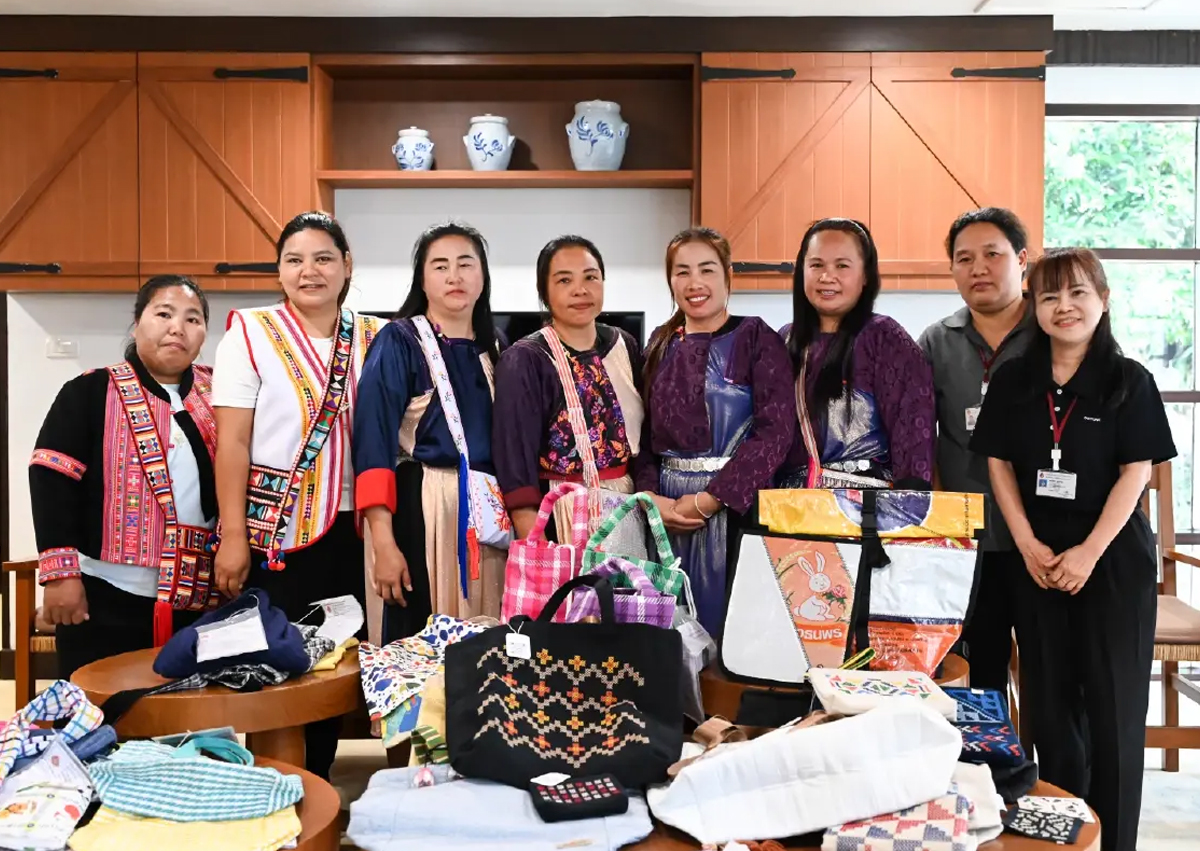
Forest Carbon Credit Initiative Bridges Thai Communities with Global Markets
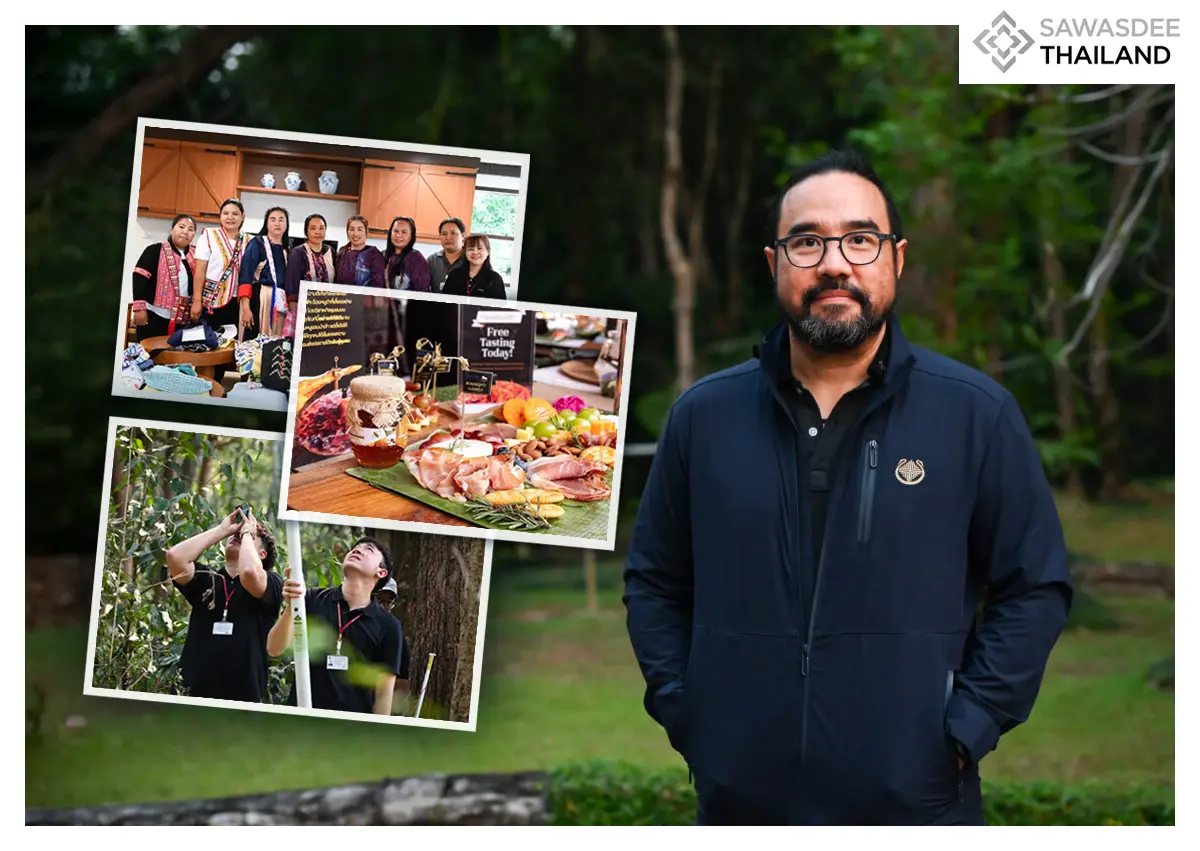
Mae Fah Luang Foundation’s forest carbon credit project links community forest conservation with private-sector funding, carbon markets and sustainable income.
The Mae Fah Luang Foundation under Royal Patronage is accelerating its forest-based carbon credit programme as part of a wider push to connect community conservation, private-sector climate action and sustainable local income.
At the centre of the strategy is the Carbon Credit Management in Forests for Sustainable Development project, launched in 2021 through cooperation between the foundation, government agencies, communities and private-sector partners.
The project was designed to help address climate change, forest fires, haze and PM2.5 pollution by turning well-managed community forests into a measurable source of carbon storage.
It is based on a simple principle: trees absorb carbon dioxide, while many Thai communities already protect forests effectively and businesses increasingly need credible ways to reduce their carbon footprint.
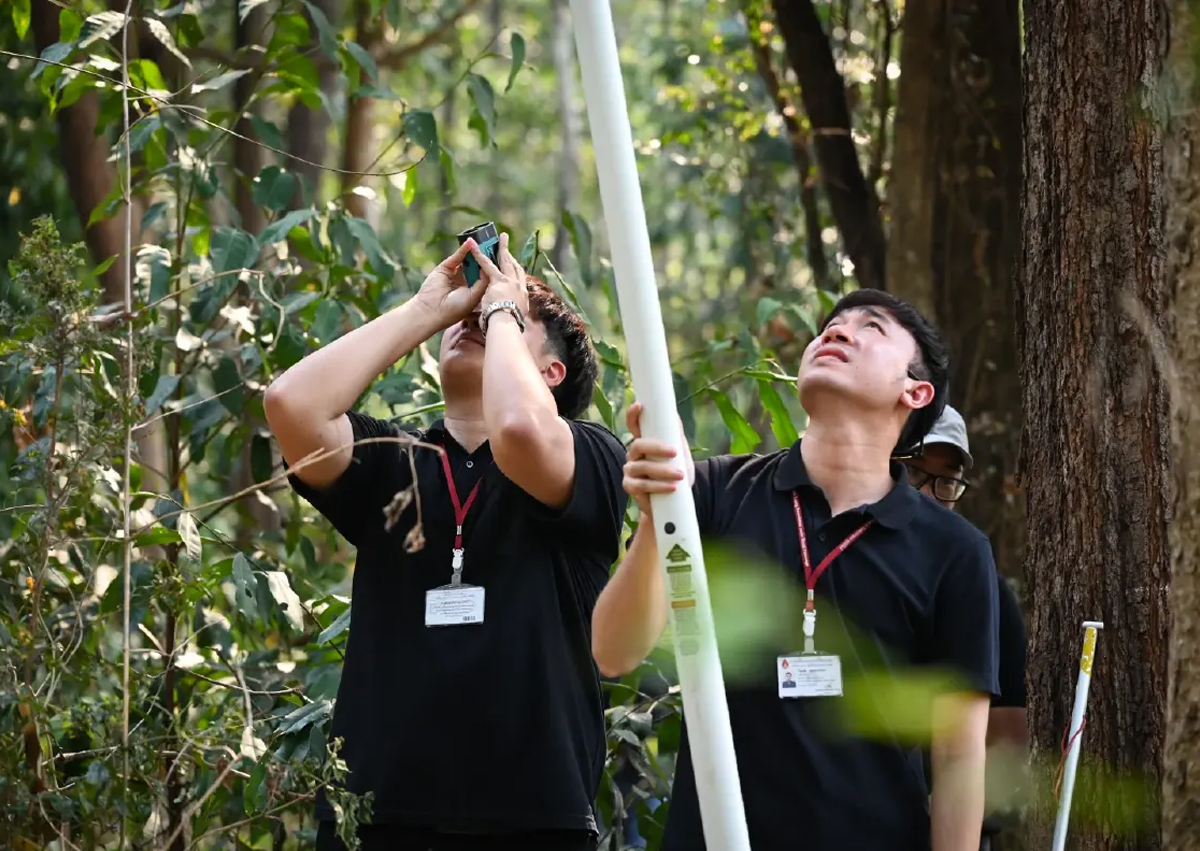
Under the model, the Mae Fah Luang Foundation acts as a bridge between communities and the private sector. It uses its expertise in forest plot surveys and carbon storage assessment to train communities, transfer knowledge and help them build systematic data on carbon sequestration.
This enables participating communities to prepare for registration under Thailand’s voluntary carbon market through government channels. Private companies provide financial support and receive carbon credits that can be used as part of their greenhouse gas reduction efforts.
Communities, in turn, earn supplementary income from forest stewardship, usually through village funds that can be used to improve quality of life and support continued forest protection.
Nature-Based Solutions Drive New Strategy
In 2026, the Mae Fah Luang Foundation embarked on a comprehensive strategic restructuring to respond to economic, social and environmental change. The new direction aims to make development not only a social mission, but also part of a market-driven economic system centred on people and natural resource restoration.
The foundation has reorganised its work into four main pillars: social business, nature-based solutions, sustainability consulting, and area-based development. Each pillar has clear leadership and is intended to build an ecosystem for knowledge-sharing, project expansion and sustainable revenue management.
The nature-based solutions pillar is now taking a leading role in driving the forest carbon credit project. Its task is to connect business partners with community networks and expand cooperation with the private sector.
The foundation is also using a “parallel system” strategy, building new teams and mechanisms alongside existing structures to accelerate results and reduce resistance to change. In the longer term, it aims to expand its development role internationally, drawing on experience from areas such as Myanmar and Indonesia.
Linking Markets, Communities and Forests
M.L. Dispanadda Diskul, secretary-general and chief executive officer of the Mae Fah Luang Foundation, said the restructuring was not only an organisational change, but also a step towards a new development model driven by market mechanisms.
He emphasised that the foundation’s core belief remains unchanged: to plant forests, people must be developed first. The difference now is that the foundation is seeking to expand that idea nationwide and connect it with global markets.
This reflects a new role for the foundation as a “sustainability economy intermediary” that links natural resources, communities and capital, while positioning itself as a model for a new form of development in Thailand.
Pushing Thai Forest Carbon Credits to the Global Market
A key part of the foundation’s approach is to push Thai forest carbon credits towards international markets, using a network of more than 300 community forests as the base.
Its distinguishing feature is the emphasis on social and community dimensions alongside carbon sequestration — an element that is still not a core criterion in many carbon markets.
The Carbon Credit Management in Forests for Sustainable Development project now covers more than 287,914 rai of forest, or about 46,066 hectares, across 12 provinces. It involves 303 communities and benefits more than 161,000 people.
The foundation aims to expand the area by another 100,000–150,000 rai in 2026, equivalent to about 16,000–24,000 hectares, as it works towards a target of 1 million rai, or 160,000 hectares, by 2029.
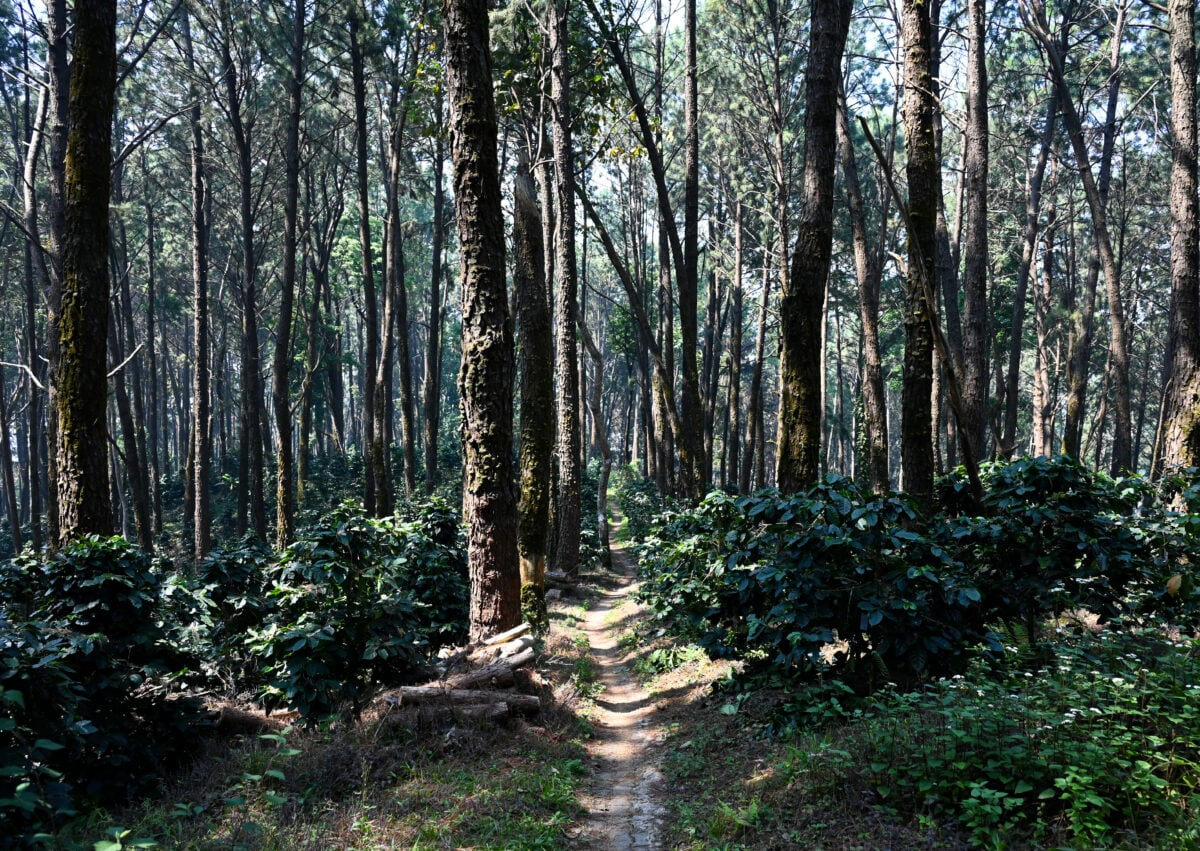
The project spans several types of ecosystems, including montane rainforest, mixed deciduous forest, dry dipterocarp forest and mangrove forest. This diversity is intended to strengthen carbon storage capacity while generating income for communities that protect natural resources.
So far, carbon credits have been certified from 12 community forests covering 12,840 rai, or about 2,054 hectares, representing 58,824 tonnes of carbon dioxide equivalent.
The foundation has also begun expanding international cooperation to channel funding directly to communities and reduce the concentration of investment in large-scale projects.
If successful, the model could help bring Thai forest carbon credits into the global market and connect the country’s natural resources more directly with the international economy.
For local communities, the approach represents a new form of community economy — one in which forest conservation is not only an environmental responsibility, but also a sustainable source of income.